
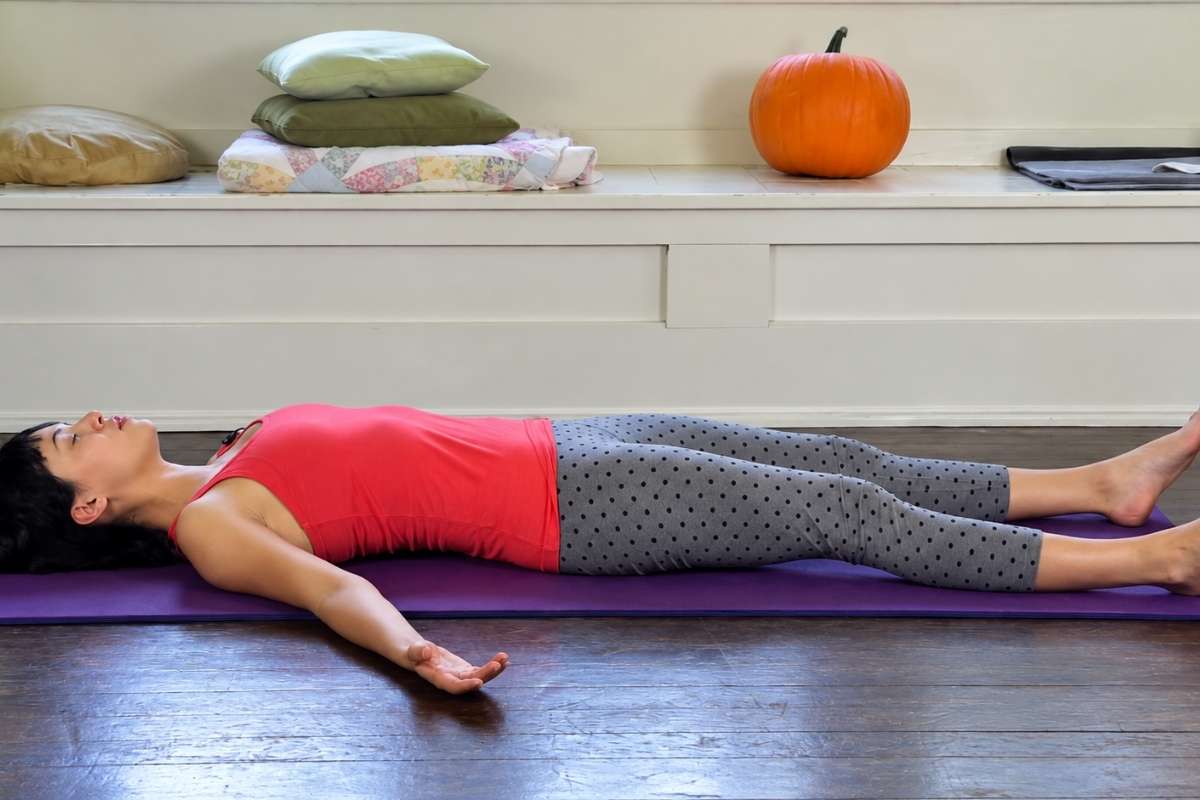
Savasana looks like the easiest part of a yoga class. You lie on your back, close your eyes, and stop moving. No balance is required. No difficult stretch needs to be held.
No muscles are visibly working hard. Yet plenty of students struggle with it more than they struggle with demanding poses.
Once movement stops, attention has fewer places to go. Tight shoulders become noticeable. Your jaw may still be clenched.
Thoughts about work, dinner, tomorrow morning, or the conversation you had three hours ago suddenly become much easier to hear.
After more than 15 years of practicing and teaching yoga, I have seen this happen countless times.
Someone can move through an entire class with impressive control, then spend Savasana adjusting a foot, opening an eye, tightening the hands, or mentally planning the rest of the day.
Difficulty here is rarely about lying still. Savasana asks you to release effort without mentally disappearing, and that is a very different skill.
Why Savasana Can Feel Harder Than Active Yoga Poses
During Warrior III, you are managing balance, hip position, leg strength, breathing, and where your eyes are focused.
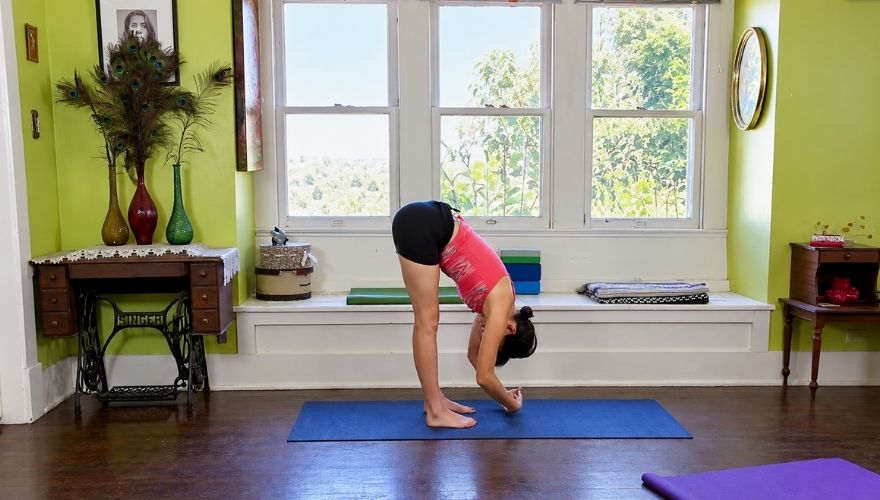
During a forward fold, you may focus on your hamstrings, spine, and breath. Even a simple lunge gives your brain several physical tasks.
Savasana removes most of those jobs. Yoga traditionally connects that shift with pratyahara, a practice of reducing attention to outside stimulation and directing awareness inward.
You are not trying to shut out every sound in the room. You are simply giving external information less of your attention.
That change can make mental activity feel stronger. Students sometimes tell me they are terrible at relaxing because their thoughts become busy as soon as Savasana begins.
Usually, nothing suddenly happened to their mind. Movement had simply been occupying their attention.
I sometimes see students become unexpectedly emotional during, let’s say, Savasana after a practice with long hip-opening poses.
Traditional yoga teaching often connects the hips with emotional release, although I would be careful not to treat that as a literal anatomical claim.
If your mind gets louder when the room gets quieter, the pose is showing you something useful. You are noticing activity that may have been present all along.
My Two Cents on Practicing Savasana
For most practices, I suggest giving Savasana about 5 to 10 minutes when you can. A shorter session may only need 3 to 5 minutes, while a longer or physically demanding practice can justify 10 to 15 minutes.
You may also hear teachers use a rough guideline of about 5 minutes of Savasana for every 30 minutes of active practice, but I would treat that as a reference point rather than a rule.
More time is not automatically better. If you are uncomfortable, distracted, or fighting to stay in the position, simply extending the clock does not fix the problem.
Set yourself up well first, then give your body enough time to actually settle. I often tell students not to end Savasana at the exact moment relaxation begins.
If it takes you three minutes to stop adjusting, slow your breathing, and release obvious tension, a three-minute Savasana has barely given you time to arrive.
Why Trying Harder Will Not Make You Relax
Effort works well in many parts of physical practice. Need more stability in a standing pose? Muscular engagement may help.
Need better control during a Pilates exercise? Slowing the movement and improving coordination can make a clear difference.
Trying aggressively to relax can create another task for your brain. Now you are lying still while repeatedly checking if you are relaxed enough.
That checking itself requires effort. A wandering mind does not mean you failed at Savasana. Minds wander. Your job is to notice when it happens and gently redirect attention.
Think about mobility work. Adding more force does not automatically create better movement.
If the body starts compensating, additional effort can move you farther away from what you were trying to achieve. Savasana has a similar problem.
If you are working hard to make your mind quiet, you have simply given yourself another task. Instead of chasing complete mental silence, pay attention to unnecessary physical effort.
Check your forehead, jaw, shoulders, hands, abdomen, and legs. If you notice tension that is not helping you maintain the position, allow it to soften.
During my research, I came across a study of 57 experienced yoga practitioners which states that 22.5 minutes of Shavasana was followed by a 5.6% drop in state-anxiety scores, along with improvements on several attention and memory measures.
However, I would not treat that as proof that every Savasana produces the same response.
It does make one point clear, though, that a session can be doing its job even when your mind never becomes perfectly quiet.
Physical Discomfort Can Make Savasana Much Harder
Not every restless Savasana is caused by a busy mind. Sometimes your body is uncomfortable. Lower-back tension can develop when lying flat with straight legs.
A poor head position may irritate the neck. Tight shoulders can make the arms difficult to settle comfortably. Feeling cold can also keep muscles slightly guarded when you are supposed to be resting.
Fix those problems before deciding you need better mental discipline. For some people, placing support under the knees can reduce lower-back strain.
A folded blanket or appropriate support under the head may make the neck more comfortable. Elevating the legs can also work well when a traditional flat position does not suit your body.
Comfort does not mean forcing yourself into one textbook position. I often remind students that discomfort and discipline are not the same thing.
If your setup keeps producing muscular guarding, your body has little reason to settle.
If your back hurts during the entire pose, staying unsupported is not improving your relaxation. Adjust your position first.
Different causes may require different changes. Someone dealing with tight hip flexors may benefit most through knee support, while someone with neck discomfort may need to change head position.
Another student may simply need an extra layer because the room feels cold after movement stops.
Savasana vs. Sleep – Why Awareness Changes the Practice
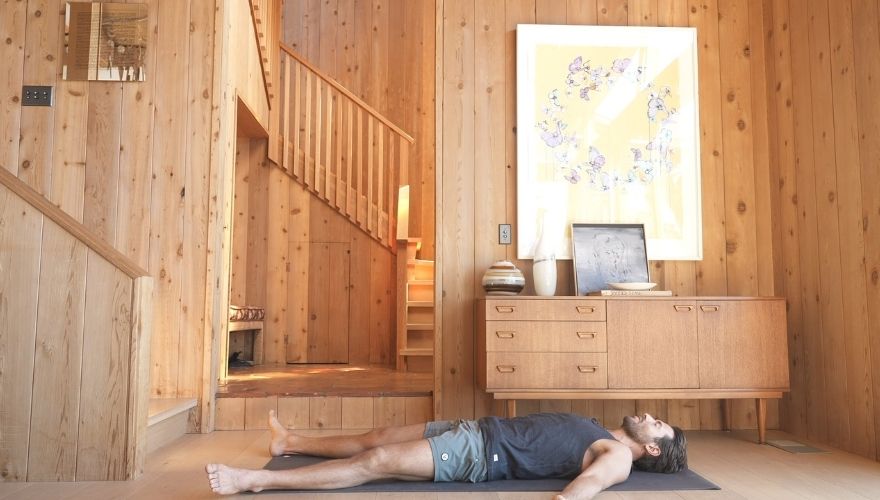
Falling asleep during Savasana is easy to understand, especially after an exhausting day or a demanding class.
Sleep and Savasana are not quite the same practice, though. Sleep involves losing ordinary conscious awareness.
Savasana asks you to let physical effort settle while keeping a light connection with what is happening.
Breathing can help with that. You do not need to manipulate every inhale and exhale.
Let breathing become natural, then use its movement as a quiet point of attention. Sensations where your body contacts the mat can work in the same way.
A study of 45 yoga practitioners found significant changes in breathing rate and heart-rate variability during 10-minute slow-breathing practices performed in Savasana.
Researchers were using controlled breathing, so I would not expect the same numbers during ordinary rest. Still, it helps explain why noticing your breathing can be useful.
You do not need to force it slower. Give it room to settle and pay attention to what happens. Some students prefer noticing the weight of their heels, pelvis, shoulders, and head.
Others find the rise and fall of breathing easier to follow. Occasionally falling asleep may simply tell you that you are tired.
Regularly sleeping through the entire pose changes what you are practicing. You are getting rest, which may feel good, but you are missing the attentive stillness Savasana is meant to develop.
Staying aware does not mean holding yourself in a state of rigid alertness.
If you are tightening your face or monitoring every second because you are afraid of falling asleep, you have added unnecessary effort again. Aim for a softer kind of attention.
Why Savasana Matters at the End of Yoga Practice
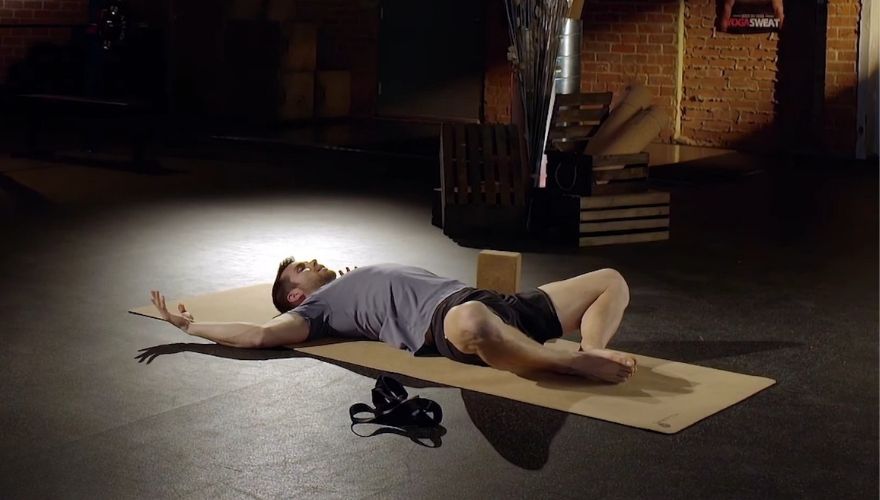
Yoga classes often involve repeated cycles of effort, adjustment, breathing, and concentration. Ending immediately after the final active pose can leave you carrying some of that effort with you.
Savasana creates a deliberate transition. Once you become still, you can notice what has not settled yet. Maybe your shoulders are still slightly elevated.
Maybe your fingers are curled. Maybe your breathing still has the controlled quality you used during harder poses. Maybe your mind has already moved ahead to whatever happens after class.
Duration matters less if you spend the whole pose waiting for it to end. I see Savasana as the point where practice changes direction.
Most of class asks you to create useful effort. Now you are noticing which effort can stop. That skill carries into other movement work too.
Good posture does not require every muscle to stay tense. Better mobility does not require maximum stretching force.
Efficient movement depends partly on producing tension when you need it and releasing tension when you do not. Savasana gives you a quiet place to practice that distinction.
What People Ask Me About Savasana
Over the years, I have heard the same Savasana questions come up after class, especially once students realize that lying still can raise more questions than expected.
Do I have to close my eyes during Savasana?
Is it okay to move during Savasana?
Yes, if you actually need to. Scratch an itch, adjust a painful shoulder, or reposition a leg that is becoming numb. What I would pay attention to is automatic fidgeting. If you want to move every 20 seconds without any real discomfort, notice the urge for a moment before reacting to it. Sometimes movement is necessary. Sometimes it is simply habit.
Can I do Savasana on my side instead of my back?
Absolutely. Side-lying can be more comfortable for people who dislike lying flat, and it may also be appropriate during later stages of pregnancy or when back discomfort makes a supine position unpleasant.
Use enough support around your head and between your legs to avoid replacing one uncomfortable position with another.
In Conclusion
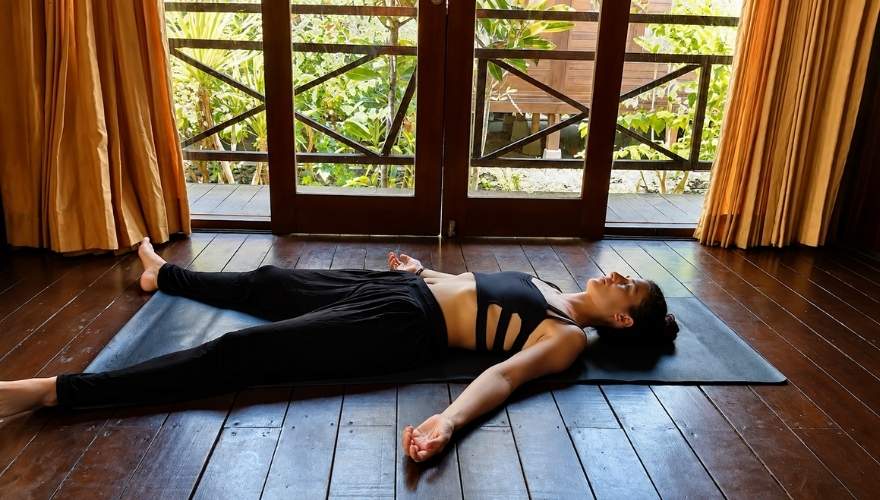
Savasana may look physically simple, but simplicity removes many of the distractions available during harder poses. You begin to notice tension.
Thoughts come and go. Small discomforts become more obvious. An urge to move may appear even when nothing actually needs adjusting.
A successful Savasana does not require an empty mind. Notice what is happening without automatically responding to every sensation or thought.
Adjust genuine physical discomfort when needed, then allow unnecessary effort to settle again.
Savasana teaches the other half of that skill, recognizing when the work is finished and giving yourself permission to stop doing it.