
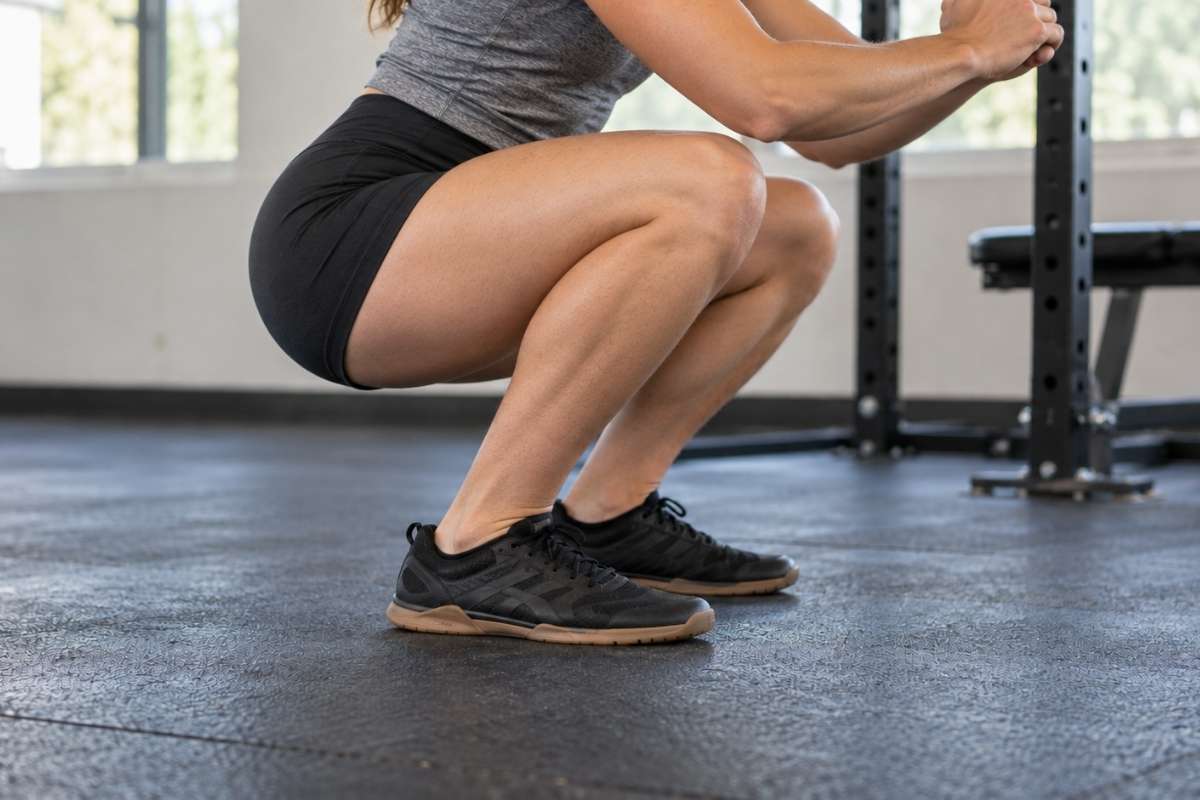
Your heels lift as you lower into a squat, your upper body tips forward, or you feel unsteady just as your hips approach their lowest position.
You may assume your legs need more strength, but your ankles could be limiting how comfortably you move.
Limited ankle dorsiflexion, the ability to bring your shin forward over your foot while keeping your heel grounded, can make squatting harder.
Your body may compensate by shifting weight, lifting the heels, or changing the position of your torso.
We’ll start with a simple mobility test, work through practical exercises, and look at how often you should practice to make that movement useful.
| Exercise | How to Perform | Repetitions |
| Ankle Circles | Sit with one leg supported and slowly rotate your ankle both ways. | 8-10 each direction, per ankle |
| Knee-to-Wall Ankle Rocks | Move your knee toward a wall while keeping your heel grounded. | 2 sets of 8-12 per ankle |
| Straight-Knee Calf Stretch | Step one foot back, straighten your rear knee, and lean forward. | 2 holds of 20-30 seconds per side |
| Bent-Knee Soleus Stretch | Bend your rear knee in a staggered position, keeping your heel down. | 2 holds of 20-30 seconds per side |
| Slow Calf Raises | Rise onto your toes, pause, and lower slowly. | 2 sets of 10-12 |
| Supported Deep Squat Holds | Hold a stable support and lower into a squat with your feet grounded. | 3-5 holds of 10-20 seconds |
1. Ankle Circles
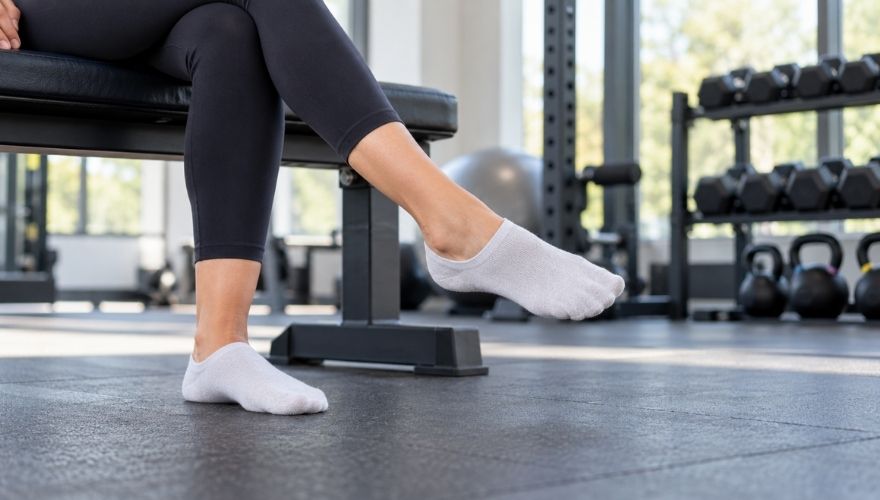
Ankle circles are a good starting point, particularly if your ankles feel stiff after sitting for long periods.
Movements should be slow and deliberate rather than quick rotations that barely use the available range.
How to do them:
1. Sit comfortably with one leg supported and your foot free to move.
2. Slowly rotate your ankle clockwise, making the largest comfortable circle possible.
3. Complete 8-10 rotations, then reverse direction.
4. Repeat with your other ankle.
Keep your lower leg relatively still so the movement comes primarily through your ankle and foot.
Ankle circles encourage active movement in several directions, including dorsiflexion, plantarflexion, inversion, and eversion.
They are particularly useful during warm-ups, although circles alone are unlikely to create major improvements in squat depth.
2. Knee-to-Wall Ankle Rocks
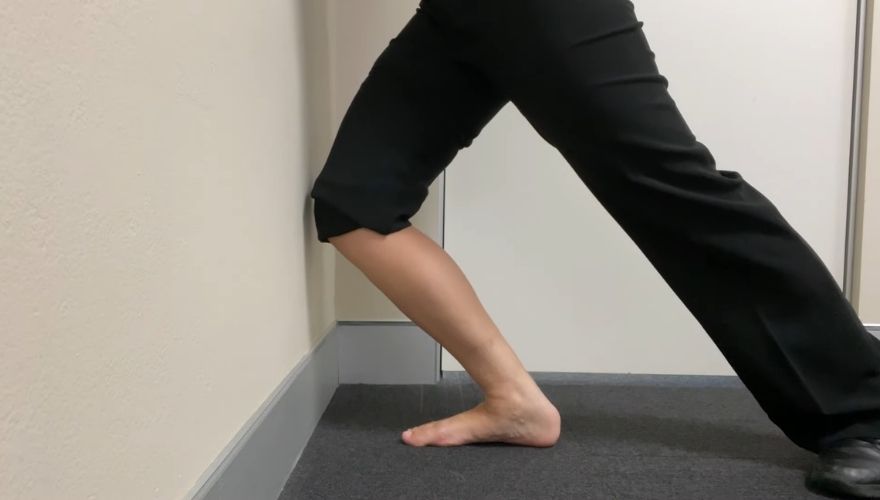
Knee-to-wall ankle rocks train the forward knee movement required during squats and lunges.
Unlike the mobility test, you repeat the motion to practice controlled dorsiflexion.
How to do them:
1. Face a wall with one foot a short distance away.
2. Keep your heel grounded and slowly move your knee toward the wall.
3. Allow your knee to travel in line with your toes without letting your arch collapse inward.
4. Return to your starting position and repeat for 8-12 repetitions.
5. Complete 2 sets on each ankle.
Move gradually into a comfortable range rather than pushing against resistance at the front of your ankle.
If your foot rolls inward every time you move your knee forward, you may be borrowing movement through the foot instead of improving control at the ankle.
3. Straight-Knee Calf Stretch
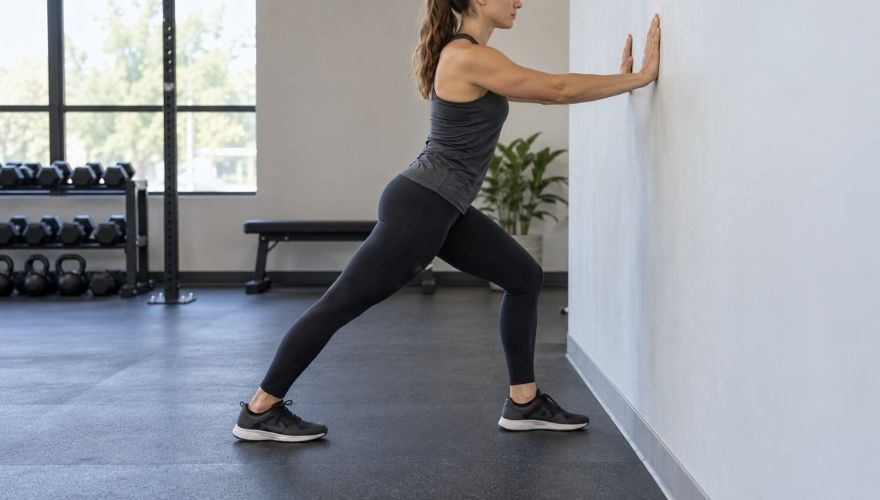
A straight-knee calf stretch primarily targets the gastrocnemius, the prominent calf muscle that crosses both the knee and ankle.
Tension in this muscle can restrict ankle dorsiflexion, particularly when the knee is extended.
How to do it:
1. Stand facing a wall with your hands resting against it.
2. Step one foot backward and straighten the rear knee.
3. Keep both feet facing forward and press your rear heel toward the floor.
4. Lean forward until you feel a comfortable stretch through the upper calf.
5. Hold for 20-30 seconds and repeat twice on each side.
Avoid arching your lower back or turning your rear foot outward to create more movement.
A controlled stretch should feel like steady muscular tension, not a sharp pulling sensation.
4. Bent-Knee Soleus Stretch
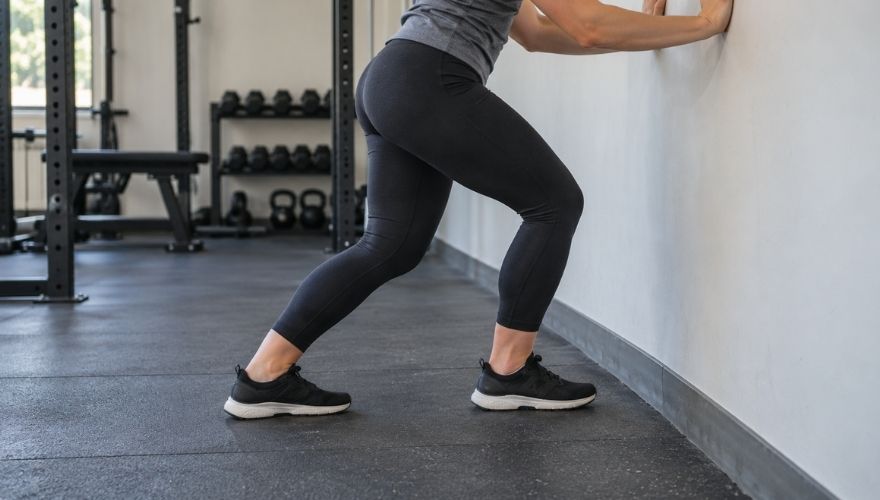
Bending your knee changes how the calf muscles contribute to the stretch.
With the knee bent, the gastrocnemius relaxes, allowing greater emphasis on the soleus, a deeper calf muscle that supports ankle movement and lower-leg stability.
Since your knees bend considerably during squats, working on ankle dorsiflexion in this position is particularly useful.
How to do it:
1. Stand in a staggered position with your hands against a wall for support.
2. Keep the heel of your rear foot planted.
3. Slowly bend your rear knee while maintaining pressure through the foot.
4. Continue until you feel a stretch lower in your calf.
5. Hold for 20-30 seconds and repeat twice per side.
You should feel the movement around the calf and ankle rather than forcing the knee into an uncomfortable position.
If your heel rises, reduce the forward movement until you can maintain contact with the floor.
5. Slow Calf Raises
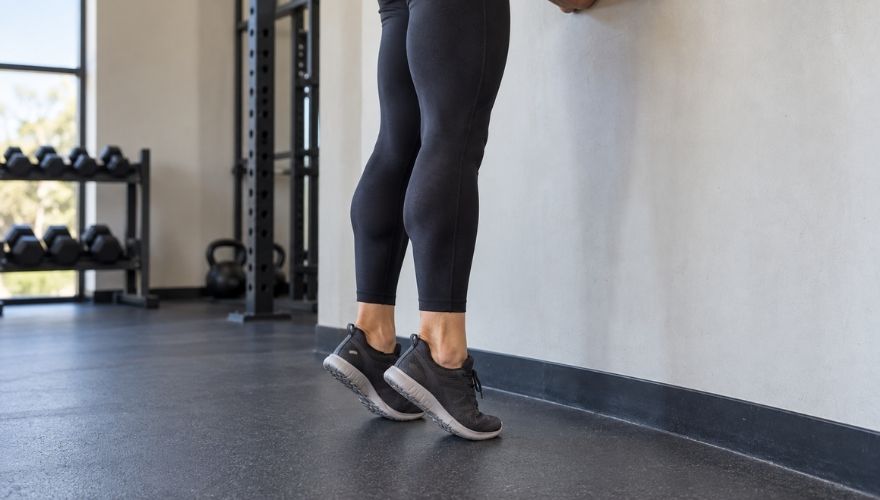
Stretching can help improve flexibility, but calf strength is equally important for ankle function.
Calf raises strengthen the muscles responsible for lifting your heels, while controlled lowering develops strength and stability through the available ankle range.
How to do them:
1. Stand with your feet approximately hip-width apart.
2. Rest your fingertips against a wall or stable surface if you need support.
3. Slowly rise onto the balls of your feet.
4. Pause briefly at the top.
5. Lower your heels over 3-5 seconds without dropping your weight.
6. Complete 2 sets of 10-12 repetitions.
Keep your ankles aligned rather than allowing them to roll outward or inward. Once you can complete both sets comfortably, try single-leg calf raises while holding a stable support.
Single-leg variations place greater demands on calf strength and balance.
However, progression should depend on your control, not simply your ability to complete more repetitions.
6. Supported Deep Squat Holds
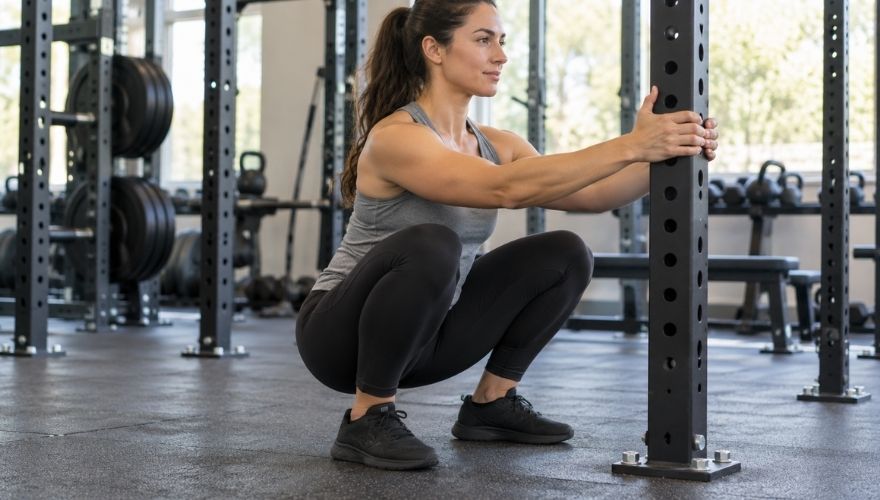
Supported squat holds help you apply ankle mobility to the movement you want to improve.
A stable support allows you to practice lowering into a squat without constantly worrying about losing your balance.
How to do them:
1. Stand facing a sturdy post, railing, or other stable support.
2. Hold the support and position your feet at a comfortable squat width.
3. Slowly bend your knees and hips, lowering into a squat.
4. Keep your feet grounded and distribute your weight across the heel, big-toe base, and little-toe base.
5. Hold for 10-20 seconds, then return to standing.
6. Repeat 3-5 times.
Only lower as far as you can maintain comfortable joint positions.
If your heels lift or your lower back rounds excessively as you descend, reduce the depth and work within a range you can control.
Using support is not cheating. It allows you to practice a movement pattern while gradually improving your ability to perform it independently.
Over time, try reducing how much assistance you need while maintaining steady foot pressure and comfortable knee movement.
Why Ankle Mobility Matters for Squats and Balance
Ankle dorsiflexion allows your shin to move toward your toes while your heel stays on the floor. You use it when walking downstairs, climbing steps, lunging, and squatting.
As you lower into a squat, your knees naturally travel forward to help keep your center of mass balanced over your feet.
A study published in Sports Biomechanics found a strong association between ankle dorsiflexion and squat depth among 20 healthy adults (r = 0.69).
Participants with greater ankle mobility during a weight-bearing lunge test generally achieved greater squat depth, supporting the importance of forward ankle movement during squats.
Common signs of limited ankle mobility include:
| Common Sign | Possible Cause | Effect on Squat |
| Heels lifting | Limited ankle dorsiflexion | Difficulty reaching squat depth with heels grounded |
| Excessive forward leaning | Restricted forward knee movement | Torso tips forward to maintain balance |
| Knees collapsing inward | Limited ankle mobility, hip weakness, or poor motor control | Reduced knee alignment and stability |
| Feeling unsteady | Insufficient ankle control | Difficulty maintaining balanced pressure through the feet |
In a study involving 30 recreationally active adults, researchers found that altering ankle positioning increased inward knee movement and changed lower-body muscle activation.
Ankle mobility is not the only factor influencing knee alignment, but it deserves attention when squat technique feels inconsistent.
In my experience, I often see people stretch their calves repeatedly without checking how their feet behave during a squat.
Your aim should be to keep your weight balanced across the foot while allowing the ankle, knee, and hip to move together.
Limited ankle mobility isn’t the only thing that can affect lower-body movement. If you spend much of the day sitting, these hip flexor stretches for people who sit all day may also help you work on hip mobility.
How to Test Your Ankle Mobility
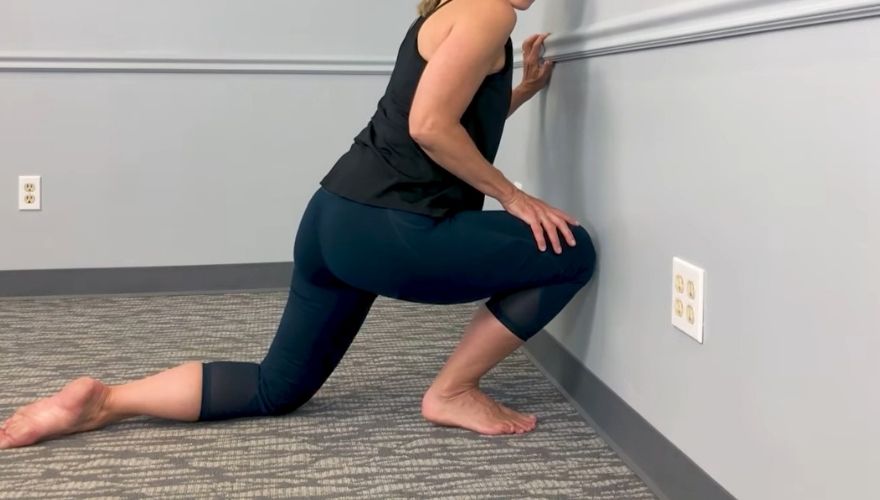
A simple knee-to-wall test can help you assess how far your ankle moves into dorsiflexion while your heel stays grounded.
A review published in Manual Therapy found that the weight-bearing lunge test provides consistent measurements of ankle dorsiflexion.
That makes it useful for monitoring changes over time, provided you use the same testing position and measurement technique each time.
You need a wall, a ruler or measuring tape, and enough space to step forward comfortably.
Knee-to-wall testing measures how far the knee can travel forward without the heel lifting.
Follow these steps:
1. Face a wall and place one foot approximately 5-10 cm (2-4 inches) away.
2. Keep your foot flat and point your toes toward the wall.
3. Slowly bend your front knee until it touches the wall, keeping your heel grounded.
4. Move your foot slightly farther away if the movement feels easy, or closer if your heel lifts.
5. Find the greatest distance that allows your knee to touch the wall without your heel lifting or your foot rolling inward.
6. Measure the distance between your big toe and the wall, then repeat on the opposite ankle.
Approximately 10-12 cm (4-4.7 inches) is a commonly used reference range for this test. However, it is not a universal requirement, and testing methods can influence the measurement.
Pay particular attention to differences between your ankles. A noticeable difference may help explain why one side feels less comfortable during lunges or squats.
Sensation also matters. Tension through the calf may suggest muscular restriction, while pinching at the front of the ankle can indicate a different limitation.
If you experience sharp pain or persistent pinching, avoid forcing the knee farther forward.
If you’d like to see how an ankle mobility test looks in practice, Dr. Natalie Cordova from CORE Chiropractic demonstrates the movement in the video below. You can use the demonstration as a visual reference alongside the steps above. Follow the video’s safety guidance, and stop if a movement causes pain or worsens your symptoms.
How Often Should You Practice Ankle Mobility Exercises?
Consistency matters more than spending a long time stretching once a week.
For most people, 5-10 minutes of ankle mobility work, 3-5 times per week, is a practical starting point. Adjust the frequency according to your current mobility, exercise routine, and recovery needs.
You do not need to perform every exercise during every session.
| Exercise | Suggested Frequency | Main Purpose |
| Ankle circles | 8-10 each direction | Active movement and warm-up |
| Knee-to-wall rocks | 2 sets of 8-12 per ankle | Controlled dorsiflexion |
| Straight-knee calf stretch | 2 holds of 20-30 seconds per side | Gastrocnemius flexibility |
| Bent-knee soleus stretch | 2 holds of 20-30 seconds per side | Bent-knee ankle mobility |
| Slow calf raises | 2 sets of 10-12 | Calf strength and control |
| Supported squat holds | 3-5 holds of 10-20 seconds | Squat mechanics and balance |
For a short warm-up, I would prioritize ankle circles and knee-to-wall rocks. Both allow you to move actively without spending much time in static positions.
Calf stretches and strengthening exercises can fit into a dedicated mobility session or the end of a workout.
If you also run regularly, you can complement your mobility routine with these stretches after a run to learn which stretches may be useful after your workouts.
Closing Thoughts
Better ankle mobility can make squats feel more comfortable and improve your ability to control your balance during lower-body movements.
However, increasing flexibility is only part of the process. Your calves need strength, your feet need stability, and your knees and hips need to work together through the available range.
Start by checking your ankle dorsiflexion, then choose exercises that address your limitations. Practice regularly and measure progress through both movement quality and comfort.
A lower squat is not automatically a better squat. What matters is having enough comfortable ankle movement to reach the depth you need while maintaining control.