
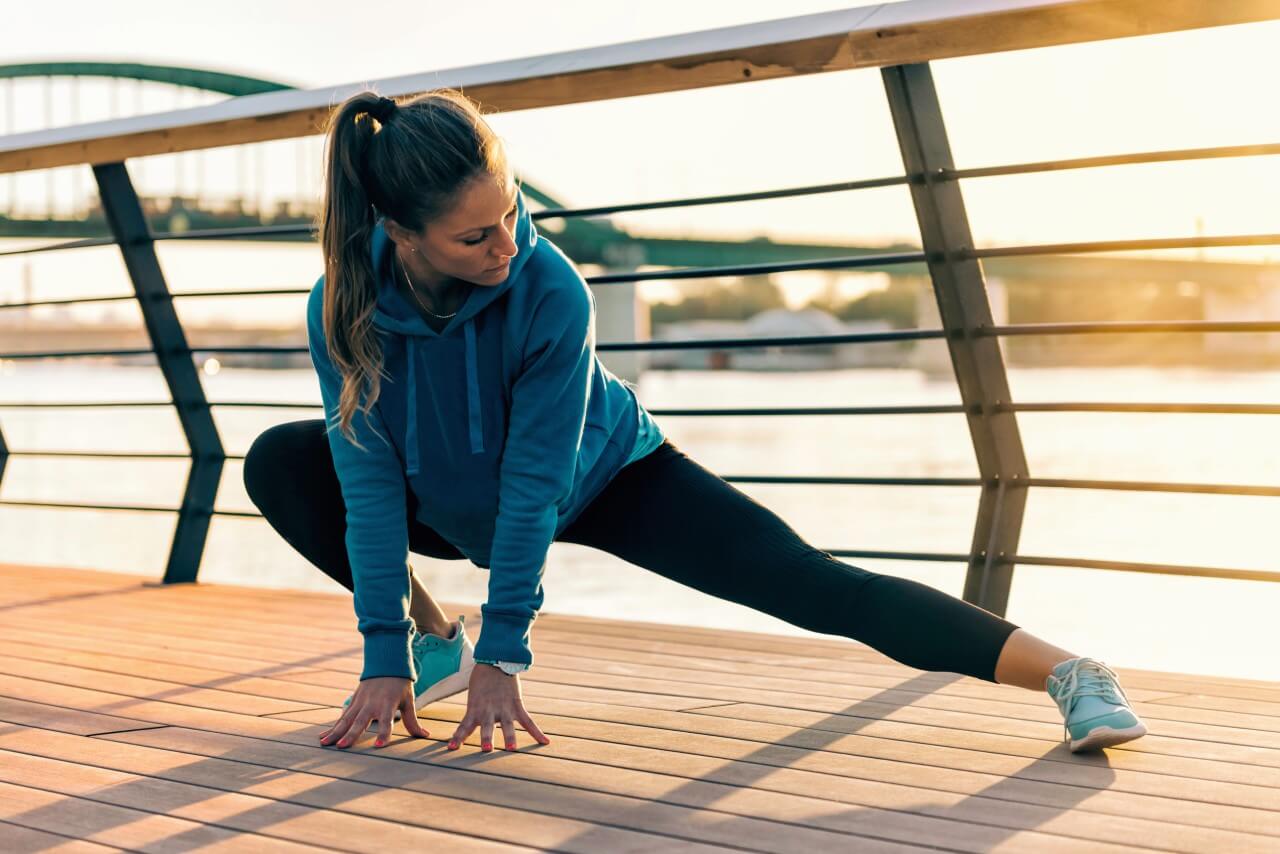
Finishing a run and immediately reaching for your toes is almost automatic for some runners.
Calves get stretched against a wall, quadriceps get pulled toward the hips, and hamstrings receive whatever attention is left.
But how much of that stretching is actually useful?
Stretches after running can help maintain flexibility, improve available range of motion, and address specific restrictions. What they cannot reliably do is prevent muscle soreness, repair tired muscles, or guarantee protection against injuries.
Knowing which muscles you are targeting matters just as much as choosing the exercise.
A useful post-run routine should be comfortable, controlled, and specific to your needs.
Does Stretching After a Run Actually Help?
View this post on Instagram
Yes, but the benefits depend on what you expect stretching to accomplish.
Regular stretching can increase flexibility and make certain movements feel less restricted. For runners, that may be useful when limited ankle motion, hip extension, or hamstring flexibility affects particular exercises or everyday movement.
Evidence supporting stretching as a recovery tool is considerably less convincing.
A 2011 Cochrane systematic review examined 12 studies investigating stretching and delayed-onset muscle soreness (DOMS).
Researchers found that post-exercise stretching reduced soreness one day later by an average of approximately one point on a 100-point scale.
Stretching also has not been shown to reliably prevent running injuries when performed as a standalone intervention. A systematic review of stretching and sports injury prevention found no statistically significant reduction in overall injury risk, suggesting that flexibility exercises alone should not be treated as an injury-prevention program.
Static Stretching vs. Dynamic Stretching
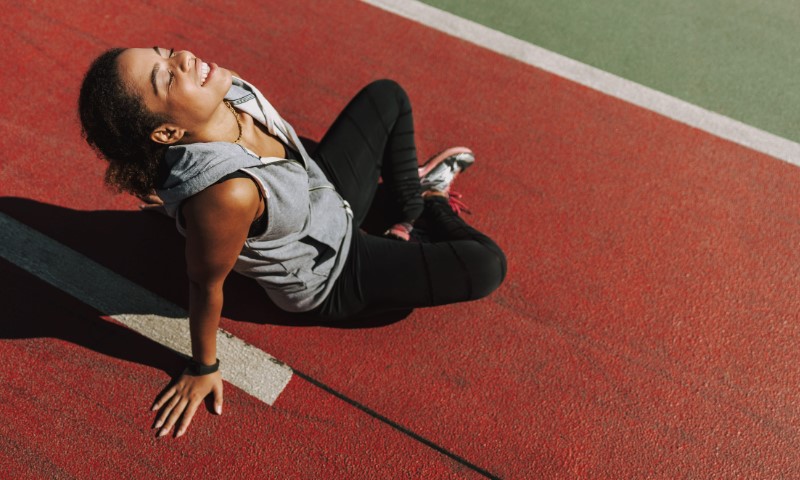
Knowing how these techniques work helps explain why their timing matters.
Static stretching involves moving into a comfortable position and holding it, usually for approximately 15-60 seconds.
Holding a calf stretch against a wall is one example. Sustained tension can help improve flexibility over time, especially when stretching is practiced consistently.
Dynamic stretching uses smooth, controlled movements through an available range of motion. Walking lunges, leg swings, and gentle marching drills are familiar examples. Dynamic movements are generally better suited to warming up before running because they prepare muscles and joints for activity.
A 2019 scientific review of static stretching found that holds exceeding 60 seconds per muscle group could temporarily reduce strength and power by approximately 4-7.5%.
Shorter holds generally produced much smaller effects, particularly when included in a complete warm-up. For runners stretching after a workout, this performance concern is considerably less relevant.
Comfortable stretching after running is less concerning because maximum power production is no longer the immediate goal.
Another distinction worth making is flexibility versus mobility.
Flexibility describes how much movement a joint or muscle allows. Mobility includes your ability to control movement through that available range.
A runner might be able to pull a knee toward the chest while lying down but struggle to control the hip during a single-leg squat.
Stretching after running is useful when improving flexibility is the objective. It is not a compulsory recovery treatment.
The Best Stretches After Running
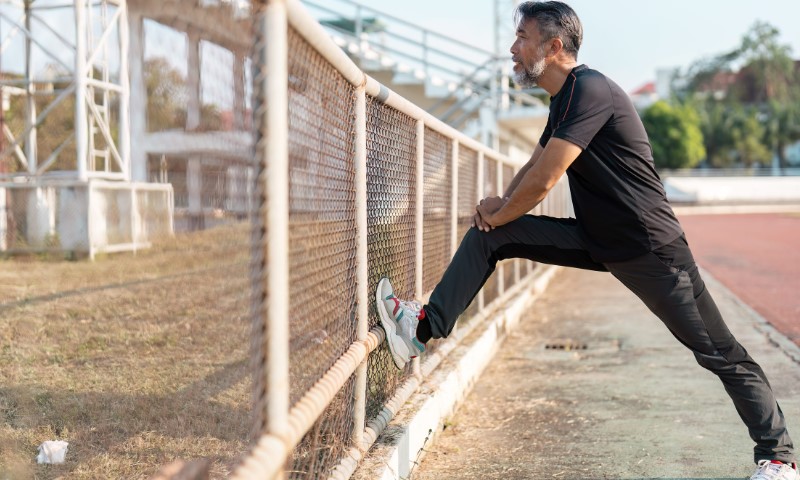
Effective post-run stretches target muscles that commonly experience repetitive loading during running, including the calves, quadriceps, hip flexors, hamstrings, and glutes.
Not every runner needs every movement.
Choose positions that address a genuine restriction and allow you to enter, hold, and leave the stretch without discomfort or excessive effort.
1. Standing Calf Stretch
Running places repeated demands on the calf muscles, particularly during uphill efforts and push-off.
A calf stretch for runners can help maintain ankle flexibility when the back of the lower leg feels restricted.
How to do it:
- Face a wall and place both hands against it.
- Step one foot backward, keeping its knee straight.
- Bend the front knee while pressing the back heel gently toward the floor.
- Hold for 20-30 seconds, then switch sides.
Keeping the back knee straight places more emphasis on the gastrocnemius, the larger calf muscle that crosses both the knee and ankle.
Avoid turning the back foot outward or allowing the heel to lift.
If you cannot keep the heel grounded, shorten your stance rather than pushing farther forward.
A stretching sensation is acceptable. Sharp pain around the Achilles tendon or heel is not.
2. Bent-Knee Calf Stretch
Calf flexibility involves more than one muscle.
Gastrocnemius stretches receive plenty of attention, but the deeper soleus also contributes substantially to running and ankle control.
Bending the knee reduces tension in the gastrocnemius and shifts the stretching emphasis toward the soleus.
How to do it:
- Begin in the same wall-supported position.
- Bend the back knee slightly while keeping its heel grounded.
- Shift your weight gently forward until you feel tension lower in the calf.
- Hold for 20-30 seconds on each side.
Keep the back foot pointing forward and avoid letting the ankle collapse inward.
Runners sometimes make the mistake of treating straight-knee and bent-knee calf stretches as interchangeable.
Although both stretch the calf region, knee position changes which muscle receives greater attention.
Using both variations can be worthwhile when calf or ankle flexibility is a particular concern.
Keep the movements gentle and controlled, following the same principles outlined in Mayo Clinic’s stretching recommendations.
3. Supported Quadriceps Stretch
Quadriceps muscles work repeatedly to help control the knee during running.
A supported standing stretch offers a convenient way to maintain flexibility at the front of the thigh.
How to do it:
- Stand beside a wall or sturdy chair for support.
- Bend one knee and bring the heel toward your buttock.
- Gently hold the ankle or foot without pulling aggressively.
- Keep your knees reasonably close, your pelvis neutral, and your torso upright.
- Hold for 20-30 seconds before changing sides.
Pay particular attention to your lower back.
If your back arches dramatically as you pull the heel closer, some of the apparent increase in range is coming through your spine rather than the intended movement.
Gently engaging the abdominal muscles and keeping the pelvis controlled can make the stretch more specific.
People who cannot comfortably reach their ankle can use a strap or towel instead.
4. Half-Kneeling Hip Flexor Stretch
View this post on Instagram
Limited hip extension can make certain running movements feel restricted, although hip discomfort may also involve weakness, fatigue, or training load.
A half-kneeling hip flexor stretch offers a controlled way to work on flexibility at the front of the hip.
How to do it:
- Kneel with one knee on a padded surface and the opposite foot forward.
- Keep your torso upright and gently tuck your pelvis.
- Shift your hips forward a small distance.
- Stop when you feel comfortable tension at the front of the kneeling-side hip.
- Hold for 20-30 seconds, then switch sides.
Pelvic position matters more than the distance you travel.
A common mistake is leaning far forward while increasing the arch in the lower back.
That movement can make the position look more advanced without producing a more useful hip flexor stretch.
Try gently tightening the glute on the kneeling side before shifting forward. Doing so can help maintain pelvic position.
A folded towel beneath the knee can also make the exercise considerably more comfortable.
5. Supine Hamstring Stretch
A runner hamstring stretch should allow you to control movement at the hip without forcing the knee straight or rounding the lower back.
Lying down makes that easier.
How to do it:
- Lie on your back with one knee bent and its foot resting on the floor.
- Raise the opposite leg toward the ceiling.
- Support the raised thigh with your hands or place a towel around the foot.
- Keep a slight bend in the raised knee if necessary.
- Hold for 20-30 seconds before changing sides.
Avoid pulling the leg aggressively toward your face.
Hamstrings cross both the hip and knee, so hip flexion and knee extension influence the stretch.
Keeping the knee slightly bent can help you find a comfortable position without excessive pulling behind the knee.
A stable pelvis is also important. If your lower back starts rounding and your hips roll upward, reduce the range.
Tingling, numbness, or shooting sensations along the leg may indicate nerve irritation rather than ordinary muscle tightness. Stop instead of trying to stretch through those symptoms.
6. Seated Figure-Four Stretch
View this post on Instagram
Glutes and smaller hip muscles contribute to pelvic and lower-limb control during running.
A seated figure-four stretch offers a supported position for working on hip flexibility.
How to do it:
- Sit near the front of a sturdy chair with both feet grounded.
- Cross one ankle over the opposite thigh.
- Keep the raised foot relaxed but supported and maintain a comfortable position at the knee.
- Hinge forward gently at the hips.
- Hold for 20-30 seconds, then change sides.
Avoid pushing forcefully against the raised knee.
If leaning forward requires substantial spinal rounding, reduce the movement and focus on the hip hinge.
People with sensitive knees or painful hip conditions may find this position uncomfortable. A different glute stretch, selected with appropriate guidance, may be preferable.
How Long Should Runners Hold Each Stretch?
For a practical starting point, aim for 20-30 seconds per side, using mild, comfortable tension.
Research also supports regular practice rather than relying on occasional intense sessions.
A systematic review and meta-analysis published in 2025 analyzed 189 studies involving 6,654 adults. Researchers reported improvements in flexibility after individual static stretching sessions and following longer-term stretching programs.
Those findings support stretching as a flexibility exercise, although they do not establish that every runner needs to stretch immediately after every workout.
Avoid holding your breath, forcing a position, or treating discomfort as proof that a stretch is working.
Comfortable repetition across several weeks is more useful than attempting to achieve maximum range in one session.
Post-Run Stretches That Don’t Help as Much as You Think
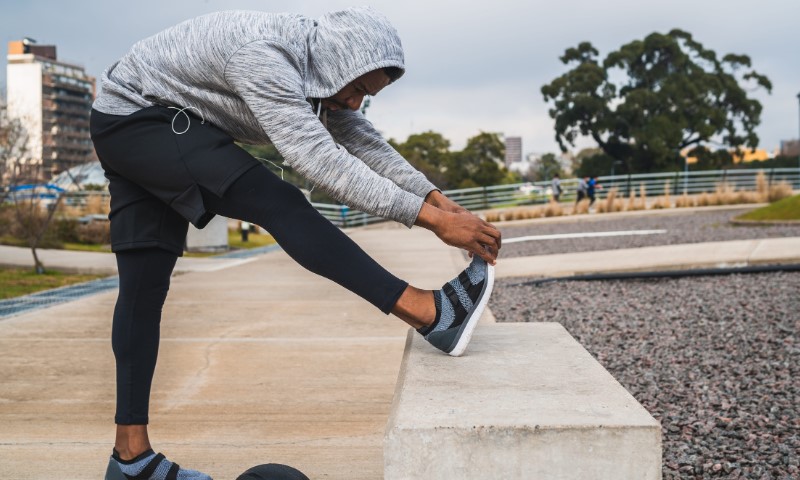
Some popular stretching habits are less effective because they target the wrong movement, use unnecessary force, or attempt to solve a problem that stretching alone cannot address.
Deep Toe Touches With a Rounded Back
Reaching toward your toes can stretch the hamstrings, but reaching lower does not automatically mean those muscles are receiving a greater stretch.
If most of the additional movement comes through spinal rounding, you may simply be changing your back position.
Consider a runner who can reach the middle of the shins with a controlled hip hinge but touches the floor after rounding the lower back.
Fingertip position has improved, but that observation alone does not demonstrate greater hamstring flexibility.
A supported supine hamstring stretch makes it easier to monitor pelvic movement and knee position.
If your back rounds farther every time you reach lower, check where the movement is occurring before assuming your hamstrings are becoming more flexible.
Bouncing Into a Stretch
Bouncing repeatedly at the end of a movement uses momentum to increase stretching force.
That technique differs substantially from controlled dynamic stretching.
Ballistic stretching has specific applications in some athletic training programs, but forceful bouncing is unnecessary for an ordinary post-run flexibility routine.
Controlled static holds are easier to regulate, particularly when muscles are tired after running.
If you prefer movement rather than holding a position, use smooth repetitions within a comfortable range.
Aggressive IT Band Stretching
Pain along the outside of the knee is sometimes blamed on a tight iliotibial band, commonly called the IT band.
However, the IT band is dense connective tissue, not a muscle that can be lengthened substantially through ordinary stretching.
A 2021 randomized controlled trial involving 30 participants investigated the immediate effects of stretching and foam rolling on IT band stiffness.
Researchers found no significant short-term change in IT band stiffness following either intervention.
Exercises involving the surrounding hip muscles may improve flexibility or comfort, but recurring lateral knee pain needs broader consideration.
Running volume, lower-limb strength, movement control, and training changes may all be relevant.
Forcing Deep Stretches After a Hard Run
A demanding workout can leave muscles fatigued and temporarily uncomfortable.
That sensation does not establish that the muscles have physically shortened or need aggressive stretching.
Following intervals, hill repeats, or a long run, choose positions that feel manageable.
Use a chair or wall for support if balance is less reliable. Reduce stretching intensity when muscles are unusually sensitive.
Skipping a painful stretch is preferable to forcing greater range simply to complete a routine.
Choose Stretches That Have a Purpose
Stretches after running are most useful when they address a specific flexibility goal. They do not need to become another compulsory part of every training session.
If your calves feel restricted, a controlled calf stretch may be worth keeping. If your hips already move comfortably, forcing additional range offers little obvious benefit.
Pay attention to technique, keep the intensity manageable, and allow flexibility to improve through consistent practice.
When the same tightness returns after every run, consider what else might need attention.
Sometimes better strength, more appropriate training loads, or additional recovery will accomplish more than another five minutes of stretching.