

Watching an experienced practitioner settle into Lotus Pose can make the position look surprisingly comfortable. Both feet rest on the opposite thighs, the spine stays upright, and the knees appear relaxed. What you don’t see is how much movement the hips need to make that position possible.
A common mistake is pulling the feet into place and assuming the knees will gradually become more flexible. Unfortunately, your knees aren’t designed to provide the rotation that your hips cannot manage.
According to a Yoga Anatomy survey, 42% of respondents who reported yoga-related knee injuries said those injuries occurred in lotus or half-lotus positions.
That figure deserves attention, especially because many of these problems develop while practitioners are simply trying to get into the posture.
Why Lotus Pose Is Linked to So Many Knee Injuries
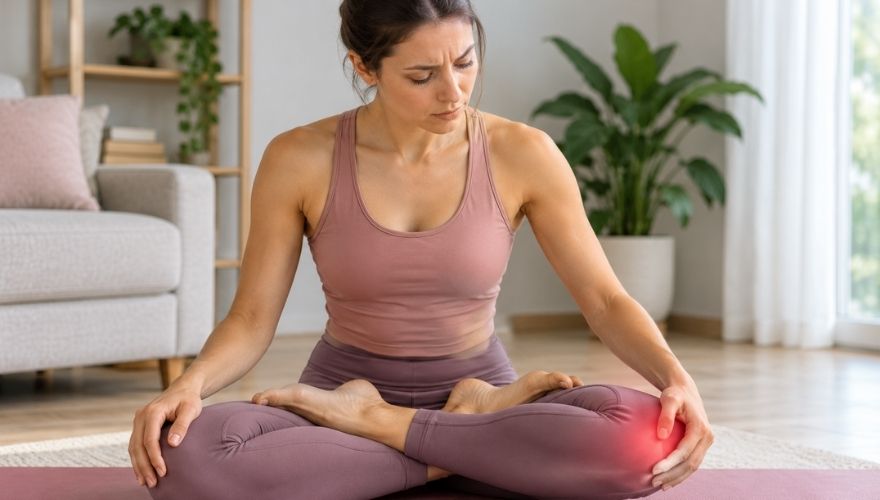
Full Lotus Pose, or Padmasana, requires your hips to flex, rotate outward, and move slightly away from your body’s midline.
External rotation is usually the biggest challenge because your thigh must turn considerably within the hip socket before your foot can rest comfortably on the opposite thigh.
An anatomical estimate commonly cited for full lotus is approximately 115 degrees of external hip rotation. Not everyone has that much available movement, even after years of yoga.
We’ve noticed that practitioners often recognize tightness in their hips but have a harder time identifying when that restriction starts affecting their knees. Someone might describe a position as a strong hip stretch even though they’re also feeling pressure along the inner knee.
Hip anatomy complicates matters further. Socket orientation and the natural angle of the femur influence how far your thigh can rotate. Some people eventually encounter bone-on-bone contact that additional stretching cannot change.
The survey also states why the transition deserves careful attention:
- 47% of reported lotus-related injuries occurred while entering the posture.
- 36% occurred while holding it.
Common Lotus Pose Mistakes That Put the Knees at Risk
Most mistakes in lotus happen when practitioners try to get their legs into the correct position without paying attention to where the movement is coming from.
Pulling the Foot Into Place
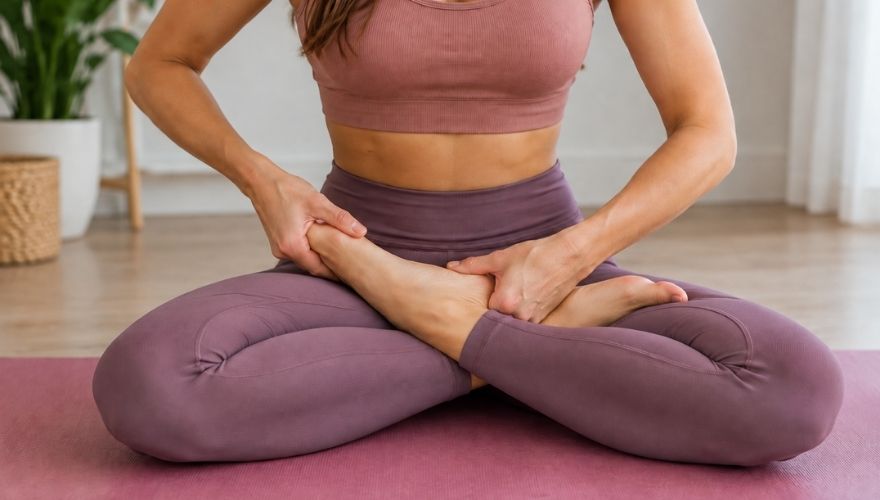
One mistake we frequently see is someone getting the first foot onto the opposite thigh relatively comfortably, then struggling with the second. Instead of checking how much rotation is available at the hip, they grab the ankle and pull harder.
Your lower leg becomes a lever when you do that. Force applied at the foot can create twisting and sideways pressure around the knee, particularly when the thigh has stopped rotating.
Depending on the position, this can compress the inner knee while overstretching the lateral collateral ligament along the outside.
Pushing the Knees Toward the Floor
Pressing your knees downward is another common attempt to make lotus look more complete.
Unfortunately, a lower knee position doesn’t necessarily mean you’ve gained external hip rotation. Once your thigh reaches its available range, additional downward pressure can increase compression inside the knee joint.
We would much rather see someone practice a comfortable hip-opening exercise with elevated knees than push those knees downward just to achieve a particular position.
Assuming Half Lotus Is Always Safer
Half Lotus can feel more accessible because only one foot rests on the opposite thigh.
However, that raised leg still needs substantial hip rotation.
Curious about how Half Lotus Pose is performed? Watch this Omstars tutorial for a step-by-step demonstration.
Half lotus can be appropriate when your hip moves comfortably into it, but reducing the number of crossed legs doesn’t automatically eliminate knee stress.
Ignoring Knee Discomfort
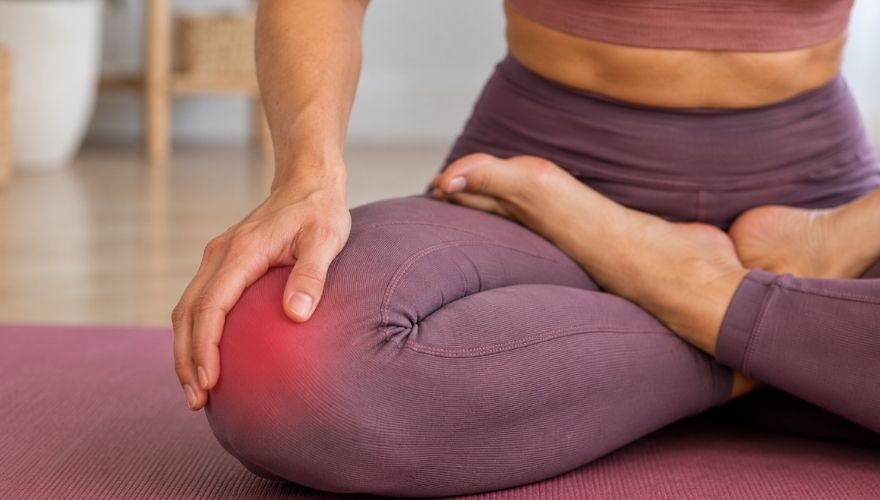
Learning to distinguish muscular stretching sensations and joint discomfort is particularly important here.
A broad pulling sensation around your outer hip or glutes can be normal. Sharp pain, localized pinching, or pressure inside your knee is different.
Inner-knee pinching may indicate excessive compression around the joint rather than a productive stretch.
How to Practice Lotus Without Forcing Your Knees
Safer lotus practice begins with improving the movement your hips can comfortably provide, rather than trying to achieve the full position through repeated attempts.
We’ve found that students often make better progress when they separate hip mobility exercises from seated practice.
A few adjustments to your preparation, technique, and sitting position can make a considerable difference.
Improve Hip Mobility First
When someone struggles with lotus, we usually suggest working on hip rotation separately instead of repeatedly attempting the full posture.
A few controlled exercises can help you assess your available movement and improve muscular flexibility where tightness is part of the problem.
| Exercise | How to Perform It | Technique |
|---|---|---|
| 90/90 Hip Rotations | Sit with bent knees and rotate between sides. | Rotate through your hips, not your knees. |
| Supine Figure-Four | Lie down and cross one ankle over the opposite thigh. | Keep your foot flexed and knee comfortable. |
| Butterfly Stretch | Sit with feet together and knees outward. | Use a blanket to support your pelvis. |
Pigeon Pose can also help some practitioners work on hip mobility, but it isn’t automatically a better choice when your knees are sensitive.
If the front knee experiences pressure or twisting, use a supported variation or return to the supine figure-four stretch.
Another consideration is the difference between muscular tightness and structural limitation. Muscles and surrounding soft tissues may respond to gradual mobility training.
Bone structure, however, determines part of your available joint range. Hip socket orientation and femoral anatomy cannot be changed through stretching.
We’ve worked with practitioners whose hip mobility improved considerably while full lotus continued to feel uncomfortable. That doesn’t mean their mobility work failed.
It means they developed movement within the range their joints could comfortably accommodate.
Stop Using the Foot as a Lever
When preparing for lotus, begin by rotating your thigh outward at the hip. Keep the movement controlled and allow your knee to bend comfortably without pulling your foot across your body.
If you need to grab your ankle and lift it aggressively onto the opposite thigh, you’ve probably reached a point where the position is asking for more rotation than your hip can currently provide.
Try lifting the leg gently, checking that your knee feels comfortable throughout the movement. Stop before pressure appears, even if your foot hasn’t reached the opposite thigh.
Avoid pushing the knee downward to finish the position.
Forward-bending lotus variations require additional hip movement and can increase the demands on an already restricted position. If upright lotus produces knee discomfort, adding a forward fold is not an appropriate next step.
Pay particular attention to your knee while entering and leaving the posture. Moving out of lotus carelessly can place unnecessary twisting forces on the joint, especially after sitting for an extended period.
You should feel the movement occurring primarily at your hip. If pressure begins building inside your knee, change the position rather than trying to stretch through it.
Choose a More Comfortable Seated Position
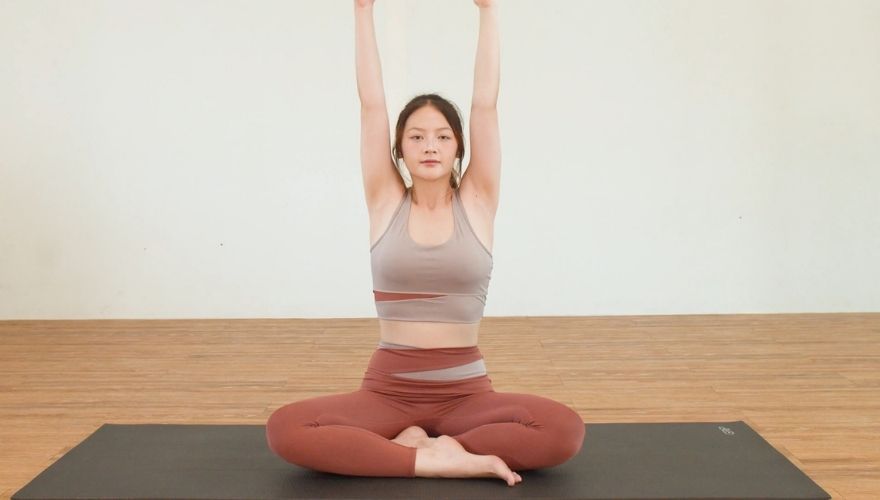
Many people spend considerable time trying to achieve lotus because they associate it with experienced meditation practice. Yet a stable seated position doesn’t require your feet to rest on your thighs.
Easy Pose (Sukhasana), Burmese-style sitting, or sitting on a firm cushion may give you all the support you need.
We can see instructors recommending placing a folded blanket beneath the sitting bones, especially when someone struggles to keep their pelvis upright. Elevating the hips can make sitting more comfortable and reduce the effort needed to maintain a natural spinal position. If your knees stay suspended and feel strained, supporting your thighs with cushions can also help.
Consider what happens when you settle into Savasana at the end of practice. You aren’t trying to prove flexibility or hold a complicated position.
You’re giving your body enough support to rest without unnecessary effort. A seated meditation posture benefits from the same practical approach.
Let Your Hips Set the Limit
Recently, we’ve become much more interested in how someone enters a posture than how closely the finished position resembles a photograph.
Lotus can be comfortable when your hips provide the necessary rotation. Problems arise when your knees have to compensate for movement that isn’t available.
Work on hip mobility separately, avoid pulling your feet into place, and never force your knees downward.
If full lotus requires pressure or twisting around your knees, choose another seated position. You can develop better hip mobility and maintain a consistent yoga practice without making your knees accommodate a position they aren’t comfortable holding.