

Your knee clicks during a quad stretch. Your hip pops as you lower into a lunge. Maybe your shoulders crack every time you reach overhead.
Should you be concerned, or is your body simply making noise? Joints pop when stretching because of pressure changes in joint fluid, tendons moving over bones, or friction between joint surfaces.
Most painless popping is harmless, especially when you can move comfortably without swelling or stiffness.
However, pain, instability, or restricted movement deserves closer attention.
A loud pop may mean very little, while a quiet click accompanied by pain can tell you something needs attention.
Why Do Your Joints Pop When You Stretch?

Several processes can produce joint noises, and they do not all involve the same structures.
Gas and Pressure Changes Inside the Joint
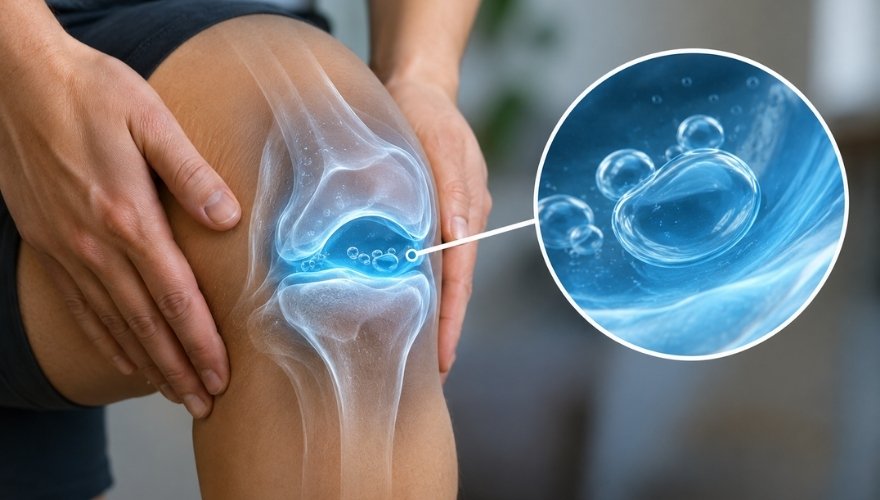
Your joints contain synovial fluid, which lubricates their surfaces and helps reduce friction during movement.
Dissolved gases, including nitrogen and oxygen, are naturally present in this fluid. As you stretch or change joint positions, pressure inside the joint can change, allowing a gas-filled cavity to form.
Known as cavitation, this process can produce a sudden cracking sound.
A 2015 MRI study published in PLOS ONE examined 10 finger joints during cracking and documented the rapid formation of a cavity as the joint surfaces separated.
Importantly, researchers observed cavity formation rather than the collapse of an existing bubble.
However, that study examined finger joints, so its findings should not be treated as an explanation for every popping knee, hip, or shoulder.
Tendons and Ligaments Moving
Tendons connect muscles to bones, while ligaments connect bones to other bones. As joints bend and straighten, these structures change position. Sometimes, a tendon slides over a nearby bony prominence and produces a noticeable snap.
Hip stretches, knee bends, shoulder rotations, and ankle movements can all produce this sensation.
Muscle tension may influence tendon movement, but a clicking tendon does not automatically mean the surrounding muscles need more stretching.
Joint Surfaces and Cartilage
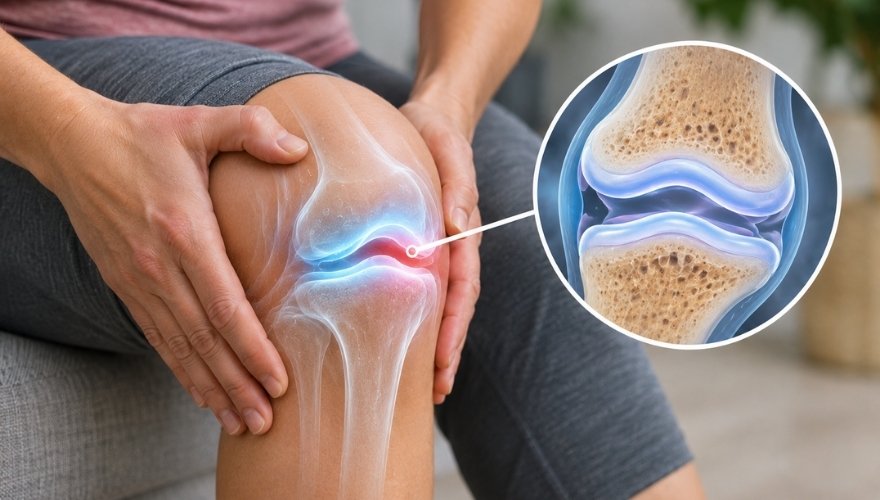
Crepitus is the medical term commonly used for popping, grinding, crackling, or crunching sensations during joint movement.
Cartilage normally provides smooth, protective surfaces where bones meet. Age-related changes or conditions such as osteoarthritis can alter these surfaces and contribute to noisy movement.
However, cartilage damage is only one possible explanation.
Popping alone cannot establish a diagnosis of arthritis, and a joint can produce considerable noise without having significant structural damage.
Is It Normal for Joints to Pop When Stretching?
Occasional painless popping is common during stretching, exercise, and everyday activities.
Knees are particularly frequent sources of joint noise, especially during squatting, climbing stairs, or straightening the legs.
Hips, shoulders, ankles, and the back can also produce clicking or cracking sounds because of their anatomy and movement patterns.
Volume is not a reliable measure of joint damage. Some completely harmless cracks are surprisingly loud, while potentially troublesome joint problems may produce very little noise.
What matters more is the combination of symptoms.
| Usually Less Concerning | Worth Checking |
|---|---|
| Popping without pain | Persistent or worsening pain |
| Normal range of motion | Locking or restricted movement |
| No swelling | Swelling or unusual warmth |
| Familiar clicking without difficulty | New clicking with instability |
| Occasional noise during stretching | Painful popping following an injury |
A hip that has clicked painlessly during lunges for years is different from a knee that suddenly starts catching after a twisting injury.
Neither sound identifies a specific diagnosis, but the circumstances help determine what to do next.
What Should You Do If Your Joints Pop During a Stretch?
First, determine if the sound is accompanied by discomfort or a change in movement. Painless clicking generally does not require you to abandon a stretch.
However, repeatedly forcing a movement to produce a satisfying crack is unnecessary.
Don’t Force the Stretch
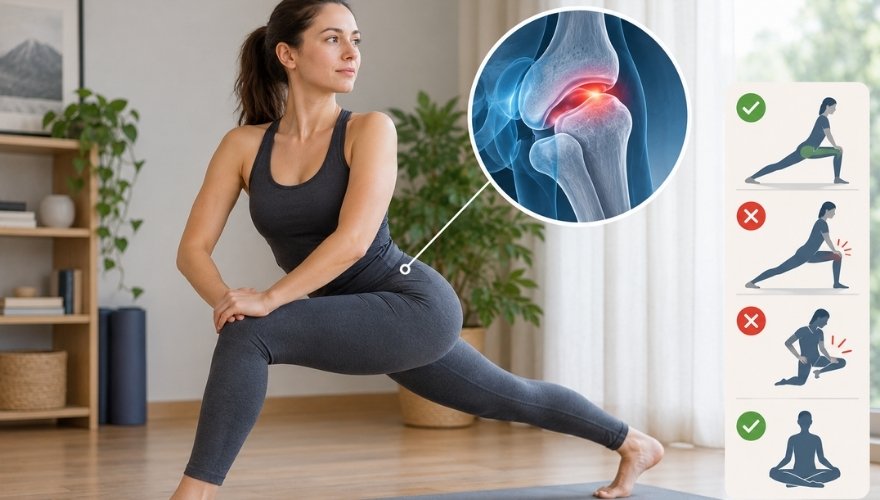
A popping sound is not proof that your stretch worked.
You might feel temporary relief after a joint cracks, but that sensation does not confirm that a muscle has lengthened or that flexibility has improved.
During yoga, a common mistake is treating every sensation of release as permission to move farther.
If your hip clicks during a lunge, pushing farther may simply repeat the same mechanical movement.
A stretch should create manageable tension in the intended muscles, not sharp joint pain, catching, or instability.
Stop the movement if those symptoms appear. Avoid testing the painful position repeatedly to see if it happens again.
Adjust Your Position and Control the Movement
Consider a practical example involving a low lunge. Someone moves their hips forward to stretch the hip flexors and notices a click at the front of the hip every time they reach a particular position.
Rather than immediately stretching farther, try the following adjustments:
- Shorten your stance slightly to reduce the amount of hip extension required.
- Reduce the depth of the lunge until the movement feels comfortable.
- Keep your pelvis controlled rather than excessively arching your lower back.
- Shift forward slowly and observe whether the clicking changes.
- Continue only through a comfortable range of motion, without catching or pain.
Changing the position can alter the path a tendon takes around nearby structures, potentially reducing mechanical snapping.
However, the click may continue even after adjusting your technique. Hip snapping is especially familiar in activities that demand considerable flexibility.
A 2006 study involving 87 elite ballet dancers found that 91% reported snapping hips, although 58% of those reporting snapping also experienced pain. Dancers place unusual demands on their hips, so these figures do not describe the general population.
Still, they make an important point. A snapping tendon can occur in a highly mobile person, and increasing flexibility is not automatically the solution.
Don’t Assume More Stretching Is the Answer
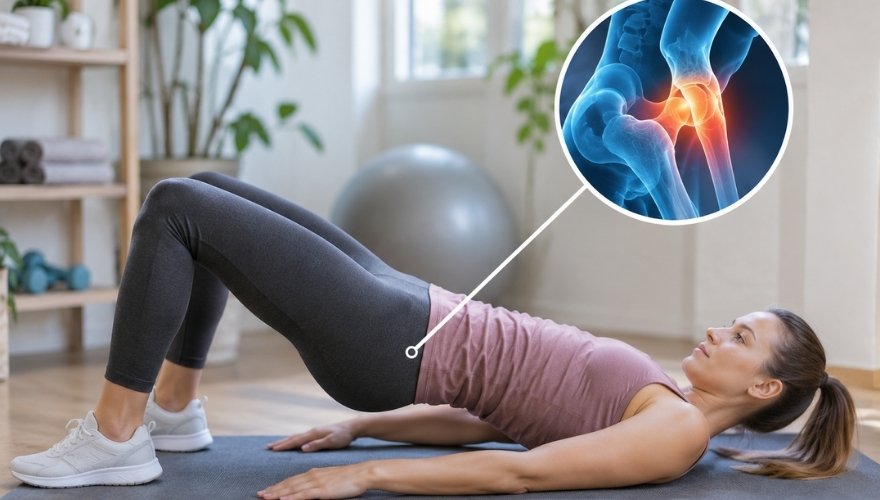
Repeated joint popping can sometimes accompany muscle tension or changes in muscular coordination.
Hip tension is also frequently discussed in yoga, particularly through the idea that hips can hold emotional stress.
However, feeling tension during a hip stretch does not tell you what is causing a clicking joint. It’s worth separating those sensations rather than assuming they share the same explanation.
In some cases, strengthening the muscles surrounding a joint may be more useful than increasing flexibility.
For example, controlled hip strengthening exercises can help improve muscular support and coordination during lunges.
physical therapist can assess persistent mechanical clicking and determine if strength, mobility, movement technique, or another issue needs attention.
More stretching is not always the right correction, particularly when a joint already moves through a comfortable range.
When Should You Worry About Joint Popping?
Popping becomes more concerning when other symptoms appear alongside the sound.
Pay particular attention to the following warning signs:
| Warning Sign | What It May Indicate |
|---|---|
| Persistent or worsening pain | Tendon irritation, bursitis, arthritis, or another joint condition. |
| Swelling or warmth | Inflammation, injury, or possible infection. |
| Locking or catching | A mechanical problem that interferes with joint movement. |
| Instability | A joint that gives way and needs professional assessment. |
| Popping after an injury | Possible injury, especially with pain, swelling, weakness, or reduced function. |
Repeatedly feeling compelled to crack a joint because it is stiff, uncomfortable, or difficult to move is another reason to consider an evaluation.
Medical assessment does not necessarily mean something serious is wrong. It helps identify the cause before symptoms become more disruptive.
When Is Medical Attention Urgent?
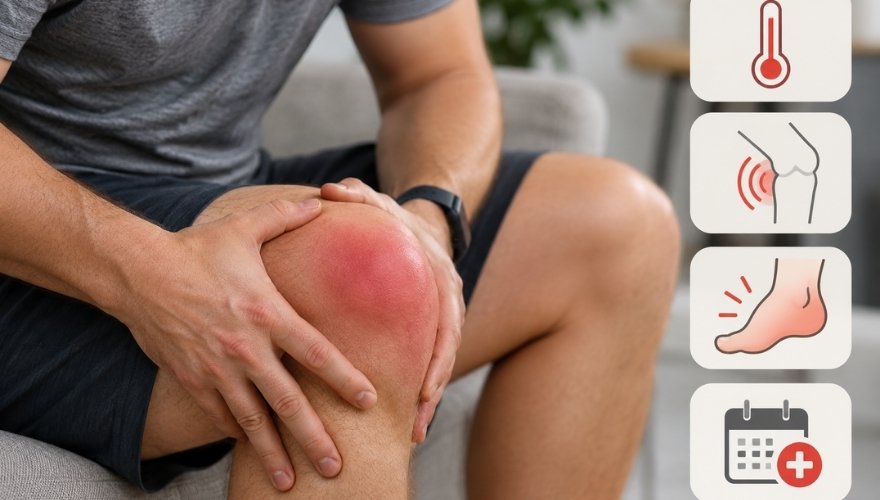
Seek urgent medical care if you experience severe joint pain after an injury, cannot bear weight, or develop a hot, swollen joint accompanied by fever.
A suddenly hot, swollen, severely painful joint may indicate an infection, which requires prompt treatment.
Fever is not always present.
An obviously deformed joint or new numbness following an injury also warrants emergency assessment.
For less severe symptoms, arrange a routine appointment if pain persists, swelling keeps returning, or joint movement becomes increasingly difficult.
Can You Prevent Your Joints From Popping When You Stretch?
However, maintaining strength and mobility may help reduce stiffness and improve movement control.
A few practical habits are worth developing:
| Recommendation | What to Do | Why It Matters |
|---|---|---|
| Move regularly | Break up long periods of sitting with walking and gentle movement. | Keeps joints moving and helps reduce stiffness. |
| Combine stretching methods | Use dynamic movements before exercise and comfortable static holds for flexibility. | Prepares your body for activity and gradually improves range of motion. |
| Strengthen surrounding muscles | Add controlled resistance exercises to your routine. | Helps muscles stabilize joints throughout movement. |
| Avoid forcing a crack | Don’t aggressively twist your neck, back, or other joints. | Forcing a pop can strain tissues without improving mobility. |
| Adjust uncomfortable positions | Reduce stretch depth or change your joint angle. | Gives you more control without repeatedly pushing into discomfort. |
Dynamic movements prepare muscles and joints for activity, while static stretching can improve flexibility when practiced consistently.
Strengthening matters because flexibility alone does not guarantee that you can control a joint throughout its available range.
A 2024 review of 27 studies involving 1,712 participants with knee or hip osteoarthritis found improvements in muscle strength, physical function, and pain following resistance training.
Even with improved mobility and strength, some joints will continue clicking because of their anatomy.
Aim for comfortable, controlled movement rather than completely silent joints.
Closing Thoughts
A joint that pops during stretching is not automatically injured, and you do not need to eliminate every click to improve flexibility.
Focus on moving comfortably, controlling your positions, and recognizing changes in how a joint functions.
If popping becomes painful, causes swelling, or interferes with normal movement, arrange a professional assessment rather than stretching harder.
A joint does not need to be silent to move well. What matters is your ability to move comfortably, control the position, and stretch without pain or instability.