

After several hours at a desk, your shoulders may feel heavy, stiff, or strangely reluctant to move overhead. Typing, using a mouse, and sitting in similar positions for long periods give your shoulders very little opportunity to move through their available range.
Raising your arms higher does not necessarily mean your shoulders are moving better, especially if your lower back does most of the work.
Effective shoulder mobility exercises combine gentle stretching, controlled movement, and shoulder blade coordination.
Seven simple exercises can help you work on all three, without turning your work break into a full workout.
| Exercise | Benefit | How to Perform | Reps / Duration |
| Shoulder Rolls and Arm Circles | Reduces stiffness | Roll shoulders and circle arms. | 10 each way |
| Wall Slides | Improves overhead mobility | Slide forearms up and down a wall. | 8-10 reps |
| Doorway Chest Stretch | Stretches chest muscles | Place forearms on a doorframe and step forward. | 20-30 sec |
| Thread the Needle | Improves upper-back rotation | Reach one arm beneath your chest. | 8 per side |
| Cross-Body Shoulder Stretch | Stretches rear shoulders | Gently pull one arm across your chest. | 20-30 sec |
| Thoracic Extension | Improves upper-back mobility | Extend your upper back over a foam roller. | 8-10 reps |
| Foam Roller Arm Raises | Improves shoulder control | Lie lengthwise on a roller and raise your arms. | 8-10 reps |
1. Shoulder Rolls and Arm Circles
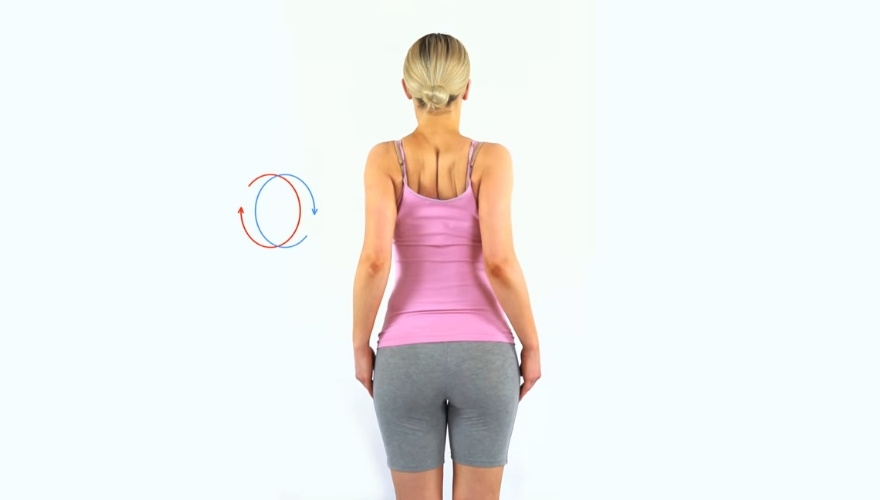
Shoulder rolls and arm circles are useful after sitting because they introduce movement without requiring equipment or complicated positioning.
How to do them:
- Sit or stand comfortably with your arms relaxed.
- Roll your shoulders forward 10 times, then backward 10 times.
- Extend your arms slightly outward and make small circles.
- Gradually increase the circle size while keeping the movement comfortable.
- Complete 10 arm circles in each direction.
Avoid rushing into large circles or tightening your neck as your arms move.
Keep your breathing steady and allow the shoulder blades to move naturally. Small, controlled circles are perfectly useful, especially when your shoulders initially feel stiff.
2. Wall Slides
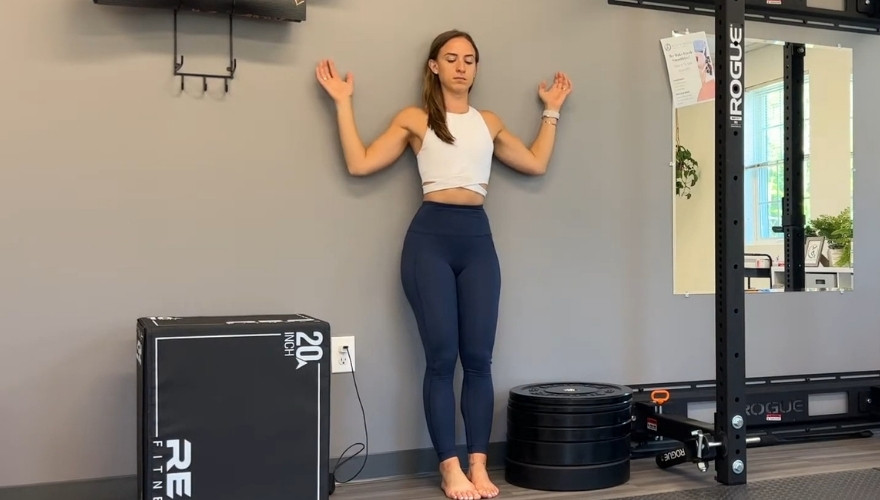
Wall slides train your shoulders and upper back to work together during overhead reaching.
Unlike passive stretching, they require muscular control as your arms travel upward. Your trapezius, deltoids, rotator cuff, and other shoulder blade muscles contribute to the movement.
How to do them:
- Face a wall and place your forearms against it at shoulder height.
- Point your fingertips upward, keeping your palms facing each other.
- Gently press your forearms into the wall.
- Slowly slide your arms upward, maintaining light pressure.
- Pause briefly, then lower your arms with control.
Complete 8 to 10 repetitions.
Watch the video below for a visual demonstration of standing wall slides and proper arm positioning.
Consider a common desk-work situation: Someone can reach a high shelf comfortably but arches noticeably during wall slides. Reducing the slide height allows the person to practice shoulder elevation with less assistance through the lower spine.
That smaller movement provides a more useful starting point than forcing the arms higher. Once you can complete the exercise comfortably, try holding a lightly stretched resistance band between your hands to increase muscular demand.
3. Doorway Chest Stretch
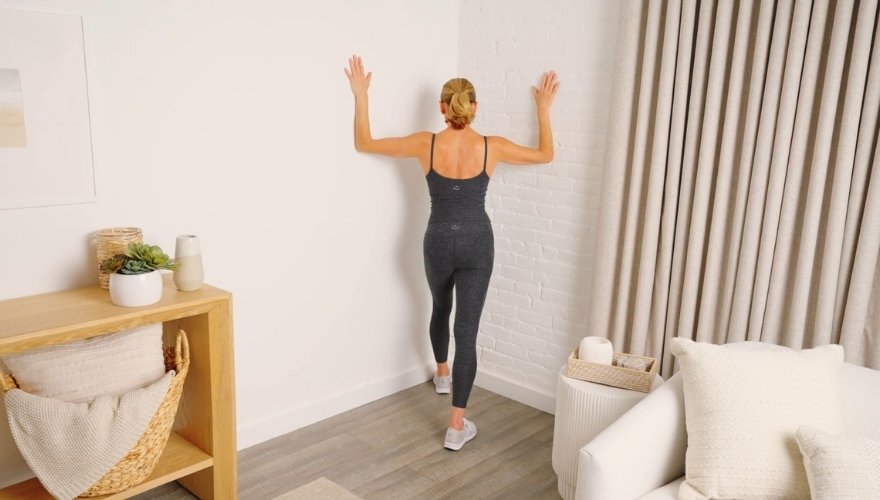
Prolonged desk work can leave the chest feeling tight, particularly when your arms spend hours positioned in front of your body.
A doorway stretch gently lengthens the pectoral muscles and introduces a position that differs considerably from typing.
How to do it:
- Stand inside a doorway.
- Place your forearms against the doorframe, with your elbows around shoulder height or slightly lower.
- Step one foot forward until you feel a gentle stretch across your chest.
- Keep your ribs comfortably aligned over your pelvis.
- Hold for 20 to 30 seconds, then release.
Avoid pushing your body aggressively through the doorway.
If the position creates discomfort near the front of your shoulder, lower your elbows or reduce the stretch.
A moderate chest stretch is enough. Forcing greater intensity does not guarantee better shoulder movement.
4. Thread the Needle
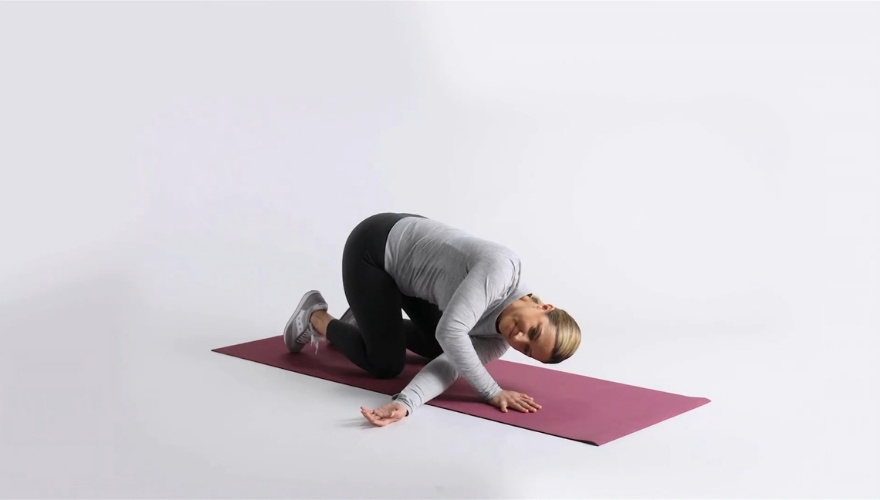
Thread the needle focuses on your thoracic spine, the middle and upper portion of your back.
Although it looks like a shoulder stretch, much of its value comes through controlled spinal rotation.
How to do it:
- Begin on your hands and knees, with your hands beneath your shoulders.
- Slide your right arm underneath your left arm, reaching across the floor.
- Allow your chest and upper back to rotate gradually.
- Pause briefly without forcing your shoulder toward the floor.
- Return to your starting position and switch sides.
Complete 8 repetitions per side.
Watch the demonstration below to see how to perform the movement correctly and maintain a comfortable range of motion.
If supporting weight on your hands bothers your wrists, place your supporting forearm on a stable raised surface or use a comfortable alternative.
Keep the movement deliberate. Your shoulder should not have to absorb extra pressure just to make the rotation look larger.
5. Cross-Body Shoulder Stretch
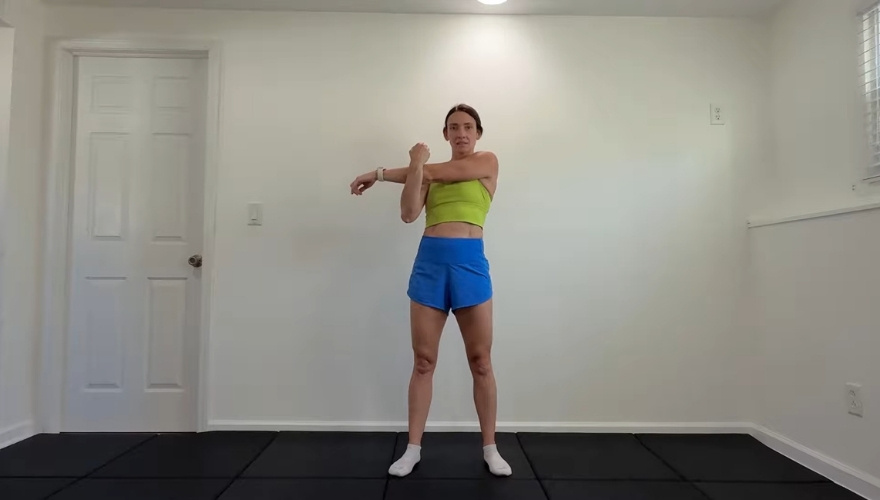
A cross-body stretch targets tissues near the back of your shoulder, including the posterior deltoid and surrounding rotator cuff region.
A 2009 study found that every degree of upward shoulder blade rotation accompanied approximately 2.3 degrees of movement at the shoulder joint during arm raising.
Your shoulder blades are supposed to move as your arms rise. Holding them rigidly in place can interfere with the natural mechanics of overhead reaching.
It can be particularly useful when reaching across your body feels restricted.
How to do it:
- Sit or stand comfortably with your shoulders relaxed.
- Bring your right arm across your chest at or slightly below shoulder height.
- Use your left hand to gently support and draw your right upper arm closer.
- Hold for 20 to 30 seconds.
- Release slowly and repeat on the other side.
Aim to feel the stretch mainly at the back of your shoulder.
Avoid pulling hard against your elbow or forcing the arm across your chest.
If you notice pinching near the front of the joint, lower your arm slightly or reduce the pressure. Stop if the pinching continues.
One useful distinction: Stretching the back of your shoulder is not the same as improving every type of shoulder rotation. A specific rotational restriction may require a different exercise or clinical assessment.
6. Thoracic Extension Over a Foam Roller
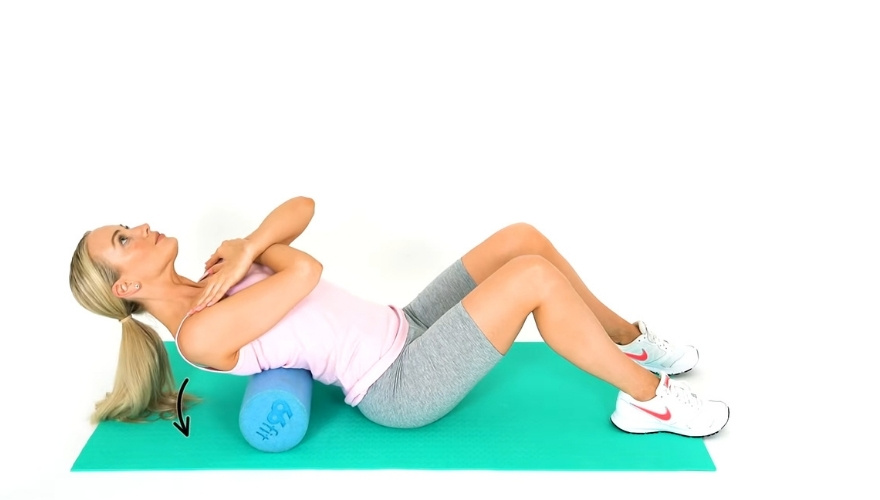
Thoracic extension helps your upper back move backward, an important part of comfortable overhead arm movement.
A foam roller provides support while allowing you to practice that motion.
How to do it:
- Sit on the floor with a foam roller positioned horizontally behind you.
- Lower your upper back onto the roller, keeping your knees bent and feet planted.
- Support your head with both hands.
- Gently extend your upper back over the roller.
- Return to a neutral position without jerking or dropping your head backward.
Complete 8 to 10 slow repetitions.
For a better understanding of the movement, watch the demonstration below.
Avoid creating most of the movement through your lower back. Your ribs should not flare excessively as you extend.
If a foam roller feels uncomfortable or is unavailable, try a smaller supported extension over the upper edge of a stable chair back.
A 2026 randomized controlled trial involving 75 adults reported improvements of 7 to 50 degrees across different shoulder range-of-motion measurements after three weeks of exercise-based treatment.
7. Foam Roller Arm Raises
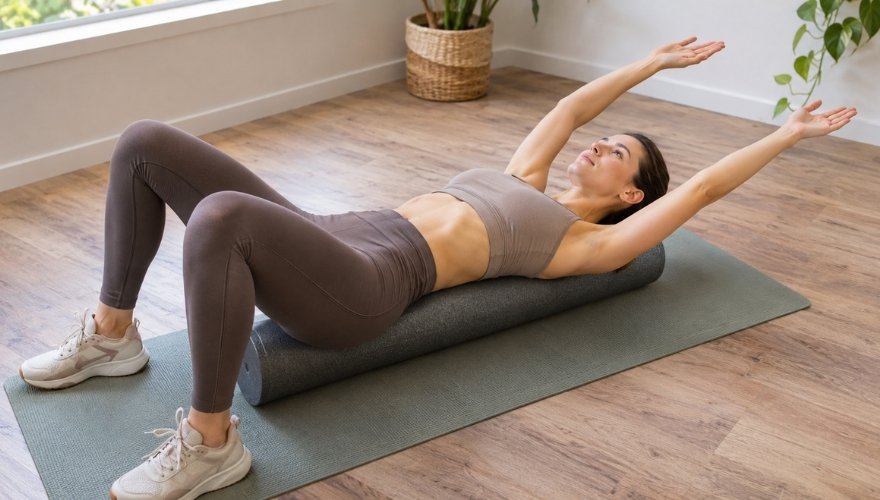
Foam roller arm raises combine overhead shoulder movement with awareness of your rib cage and spine.
Unlike the previous exercise, the roller runs lengthwise beneath your body.
How to do them:
- Place a long foam roller on the floor and lie along its length.
- Support your head, upper back, and pelvis on the roller.
- Bend your knees and plant your feet comfortably apart.
- Begin with your arms resting alongside your body.
- Slowly raise both arms toward overhead, then lower them with control.
Complete 8 to 10 repetitions. Keep your torso relatively steady while allowing natural shoulder blade movement. If your ribs lift noticeably as your arms approach overhead, reduce the reach.
Your arms may be traveling farther because your spine is extending, not because your shoulders have gained additional mobility.
For an easier variation, perform the same exercise lying flat on the floor. That removes the balance challenge and makes it easier to concentrate on shoulder movement.
Avoid forcing your hands toward the floor behind your head. Comfortable movement matters more than reaching a particular position.
How Often Should You Do Shoulder Mobility Exercises?
For general stiffness, 5 to 10 minutes of gentle mobility work daily is a reasonable starting point. Practicing at least three to five times weekly may also fit your schedule.
Regular, shorter sessions are often more practical than relying on one long stretching session after work.
Some people notice easier movement within two to four weeks of consistent practice, although that is a general expectation rather than a guaranteed recovery timeline. Longer-standing restrictions may take considerably more time.
Monitor changes through ordinary activities:
- Reaching into an overhead cabinet
- Putting on a jacket
- Reaching behind your back
- Raising your arms without excessive spinal movement
Pay attention to how comfortably you perform these tasks, not just how far your arms travel. Don’t dismiss persistent pain or worsening stiffness as ordinary tightness.
Consider taking a brief movement break every 30 to 45 minutes during extended computer sessions. Treat that interval as a practical reminder to change positions, not a medically established threshold.
Movement breaks can help interrupt prolonged sitting, although research has not identified one schedule that reliably prevents shoulder discomfort.
Mobility work does not have to stop at your shoulders. If squatting or balancing also feels restricted, ankle mobility exercises for deeper squats and steadier balance can help you work on controlled movement in your lower body.
Better Shoulder Mobility Starts With Controlled Movement
Stiff shoulders can involve several areas, including the shoulder joint, surrounding muscles, shoulder blades, and upper back.
Wall slides build controlled overhead movement, foam roller exercises address thoracic mobility and arm coordination, and gentle stretches help with specific areas of tightness.
Choose three or four exercises that fit comfortably into your workday.
Practice them consistently, pay attention to compensations, and increase your movement gradually.
A comfortable, controlled reach is a more useful sign of progress than forcing your arms a few inches higher.