
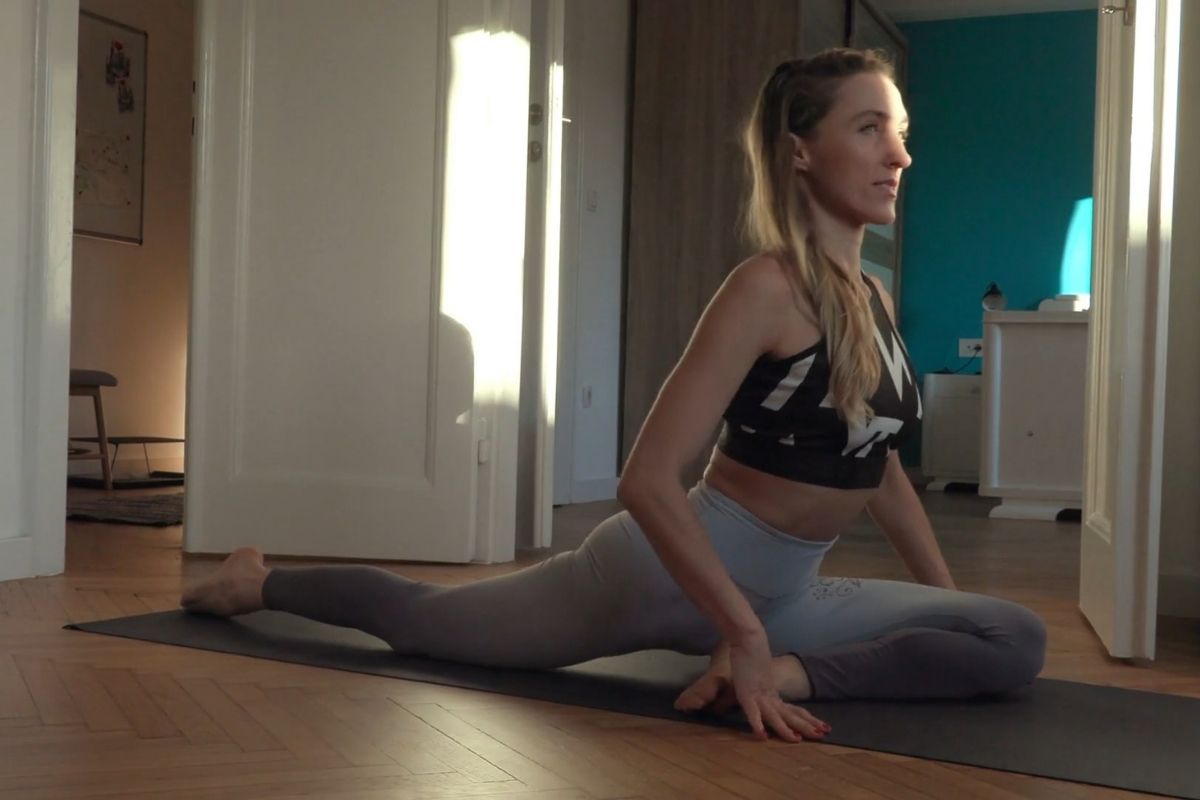
One side of Pigeon can feel surprisingly comfortable. Your hip settles, your breathing stays easy, and folding forward seems possible without much negotiation.
Switch legs, and suddenly your pelvis is hovering, your hip feels blocked, or your knee starts asking questions.
A tighter side does not automatically need more stretching.
Pigeon asks several parts of your hip to work together at the same time. Small differences in rotation, hip extension, muscle tension, strength, and joint shape can become much easier to notice here than in simpler stretches.
Honestly, we rarely expect someone’s Pigeon to look or feel the same on both sides.
What Pigeon Pose Is Asking Your Hips to Do
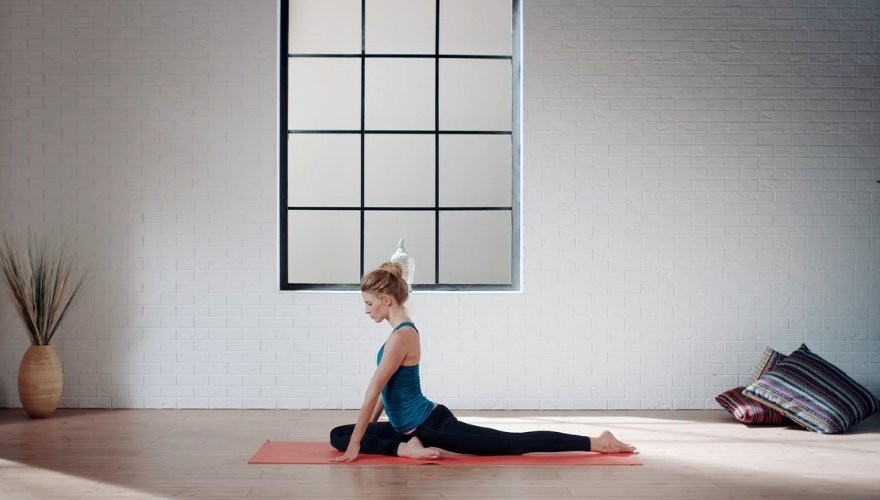
Your front hip moves into flexion, external rotation, and some abduction. Your back hip moves toward extension.
Several demands are happening at once, which explains why Pigeon can expose limitations that were not obvious during easier hip stretches.
Front-shin position also changes how much rotation your hip needs.
Moving your front foot farther forward and bringing your shin closer to parallel with the front edge of your mat usually increases the external-rotation demand.
More parallel does not mean better.
A 90-degree shin angle often gets treated as a goal, but your hip may not currently have enough rotation to support it comfortably. Moving your foot closer to your pelvis reduces that demand and can give you a much cleaner position.
If moving your foot farther forward makes your pelvis twist or your knee uncomfortable, you have increased the demand without improving the position.
Watch what happens at your pelvis. If one hip lifts sharply or your weight shifts heavily to one side, your body may be finding another way to create a position your hip cannot currently produce on its own.
Why One Side May Feel Tighter
Several factors can make one side feel less comfortable. Muscle tension may matter, but rotation, strength, previous injuries, joint shape, and habitual movement can matter too.
Your Available Hip Range Is Different
Right and left hips are rarely perfect copies of each other.
Side-to-side differences can show up even in healthy hips. A study of asymptomatic young adults recorded differences of up to 18.6 degrees in internal-external hip rotation during walking and bodyweight squatting.
So noticing a clear difference in Pigeon does not automatically mean something has gone wrong with one hip.
Previous injuries can also change how a hip moves, even after pain has disappeared. Strength differences around the pelvis may influence how comfortably you control certain angles as well.
Before deciding that Pigeon itself is the problem, compare each hip in a simpler position.
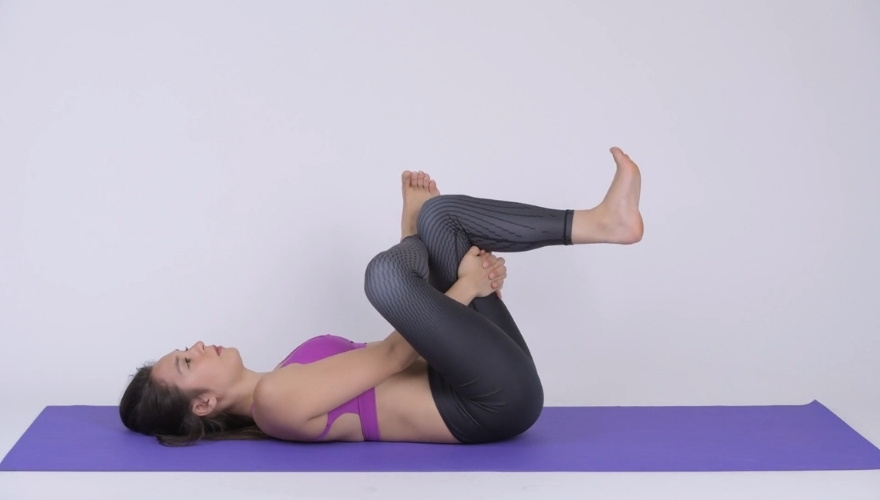
Try a supine figure four. Notice how easily each knee moves outward.
Controlled hip rotations can give you similar information without asking for the full Pigeon position.
If one side already has less rotation there, finding the same difference in Pigeon should not be surprising.
Soft-Tissue Tightness May Be Limiting the Pose
Gluteal muscles, smaller hip rotators, adductors, and hip flexors can all influence how Pigeon feels.
Muscular tension often feels broad rather than sharply concentrated in one small point. Sensation may also change as you warm up, adjust your pelvis, or spend a short period in the position.
One hip might feel noticeably easier after several gentle repetitions of hip rotation. Another might change very little.
Pay attention to that difference.
Muscle tissue usually responds to changes in position and loading. A hard stop inside the joint behaves differently and deserves a different response.
Trying to stretch harder simply because a side feels tighter can turn a useful mobility exercise into repeated irritation.
Your Joint Structure May Play a Role
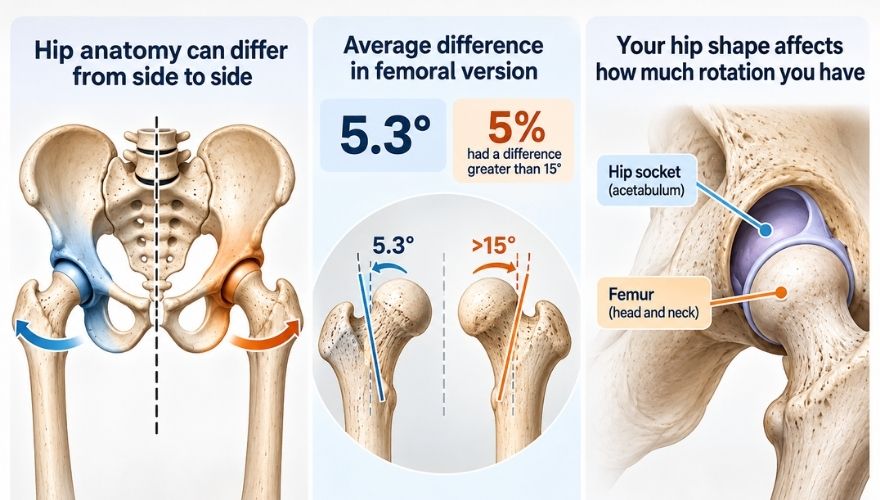
Hip anatomy varies between people, and smaller side-to-side differences can exist in one person as well.
In a CT study, the average difference in femoral version between sides was 5.3 degrees, and 5% had a difference greater than 15 degrees.
Muscle flexibility cannot erase that kind of anatomical difference, which is one reason I do not expect every student to create identical rotation on both sides.
Shape and orientation of your hip socket, along with the shape of your femur, affect how much rotation is mechanically available. No amount of stretching can completely rewrite those structures.
Sensation gives you useful clues.
Yoga teachers often say that the hips can hold emotional tension, but what does the evidence actually tell us?
A muscular stretch around the glutes or outer hip can be normal. Pinching near the groin or front of your hip, especially when it becomes stronger as you push farther, deserves more caution.
Backing out slightly may immediately improve it. Changing your front-leg angle may help too.
If a hard joint sensation consistently appears at roughly the same point, trying to force another few inches rarely gives you useful mobility.
Your Setup May Be Making One Side Harder
Small adjustments can completely change Pigeon.
Start by letting your front heel sit closer to your pelvis. Less external rotation is required, which often makes it easier to keep your pelvis controlled.
Next, look at your front hip. If it floats well above your mat, place a yoga block or folded blanket underneath it. Support allows you to stop using gravity as a substitute for available hip motion.
Your torso position matters too.
Folding forward can feel more intense, but intensity is not always telling you that your hip is working better. If folding causes your pelvis to roll sideways or your spine to collapse, staying upright may give your hip a cleaner movement demand.
If your alignment falls apart as you go lower, extra depth is not giving you a better hip stretch.
Use enough support that you can breathe comfortably and maintain control. Pigeon does not become more effective simply because your chest reaches closer to your mat.
Check the Back Hip Too
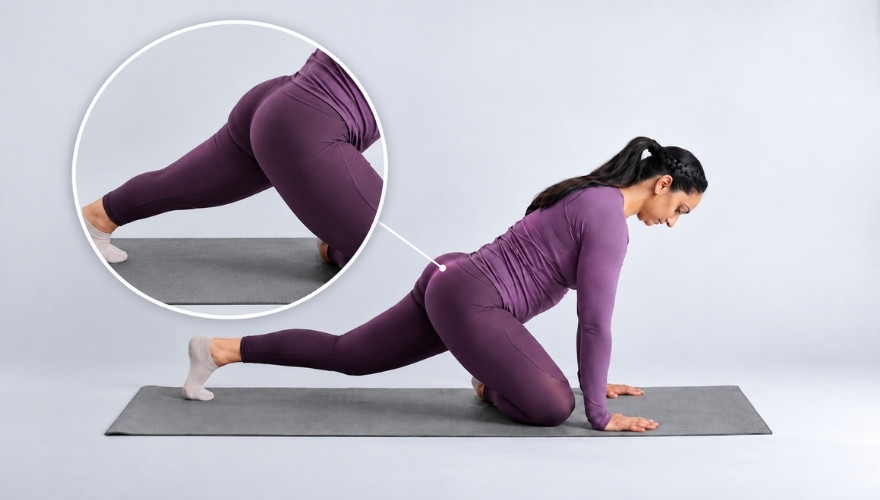
Woman performing Pigeon Pose with a magnified view of the glute and rear leg position.
Attention usually goes straight to your front leg because that is where most people feel the obvious stretch. Your back hip can create just as many problems.
Pigeon asks your back hip to move into extension.
Limited extension can make your pelvis rotate, tilt forward, or shift sideways. Your lower back may also arch more to create the appearance of extra hip extension.
At that point, blaming your front hip misses half of the position.
Research measuring hip rotation and extension in healthy adults found that restriction in one movement plane did not reliably predict restriction in another.
A hip that feels limited in external rotation can still have a separate issue with extension, which is why I check both legs before deciding what needs work.
You can also compare back-leg extension in another exercise, such as a low lunge. If one side repeatedly makes your pelvis tip or your lower back arch, that restriction may be contributing to what you feel in Pigeon.
Looking at both hips usually gives you better information than focusing only on whichever side feels tighter.
When to Back Off
Strong stretching sensation in muscle tissue is one thing. Joint pain is another.
Come out of Pigeon if you feel sharp knee pain, pinching near your groin or front hip, strong compression inside your hip, or pain that continues after practice.
Knee discomfort deserves particular attention because your knee has far less rotational freedom than your hip.
If your hip cannot produce enough external rotation, twisting force may travel toward your knee instead.
Moving your front foot closer to your pelvis can reduce that demand.
A figure-four variation may also give you a better option.
Repeatedly pushing into the same angle usually does not solve a position your joint does not tolerate well.
If pain keeps appearing despite reasonable adjustments, getting assessed by an appropriate health professional can help identify what is contributing to it.
What People Often Ask About Pigeon Pose?
How long should I stay in Pigeon Pose?
Thirty to sixty seconds is plenty for many people, especially when you are still learning how your hips respond. Longer holds can be useful in some styles of yoga, but extra time is not automatically more productive.
Why does Pigeon feel harder after running or leg training?
Running, squats, lunges, and other lower-body work can temporarily change muscle tension around your hips. Give yourself a little movement first rather than expecting your post-workout Pigeon to feel exactly like it does on a rest day.
Is it normal for my foot or leg to tingle in Pigeon?
Tingling, numbness, or a pins-and-needles sensation is not something I ask students to sit through. Change your position or come out of the pose and see if normal sensation returns quickly.
Pigeon Does Not Need to Match on Both Sides
Pigeon often feels different side to side because your mobility, joint structure, strength, movement habits, and technique are not perfectly symmetrical. Trying to make both sides look identical can lead you toward angles one hip handles comfortably and another does not.
Instead, watch how each hip responds.
If one side feels much tighter, change your setup before adding more stretch. Side-to-side difference gives you information about how each hip is moving. Use that information to choose a position you can control comfortably.