
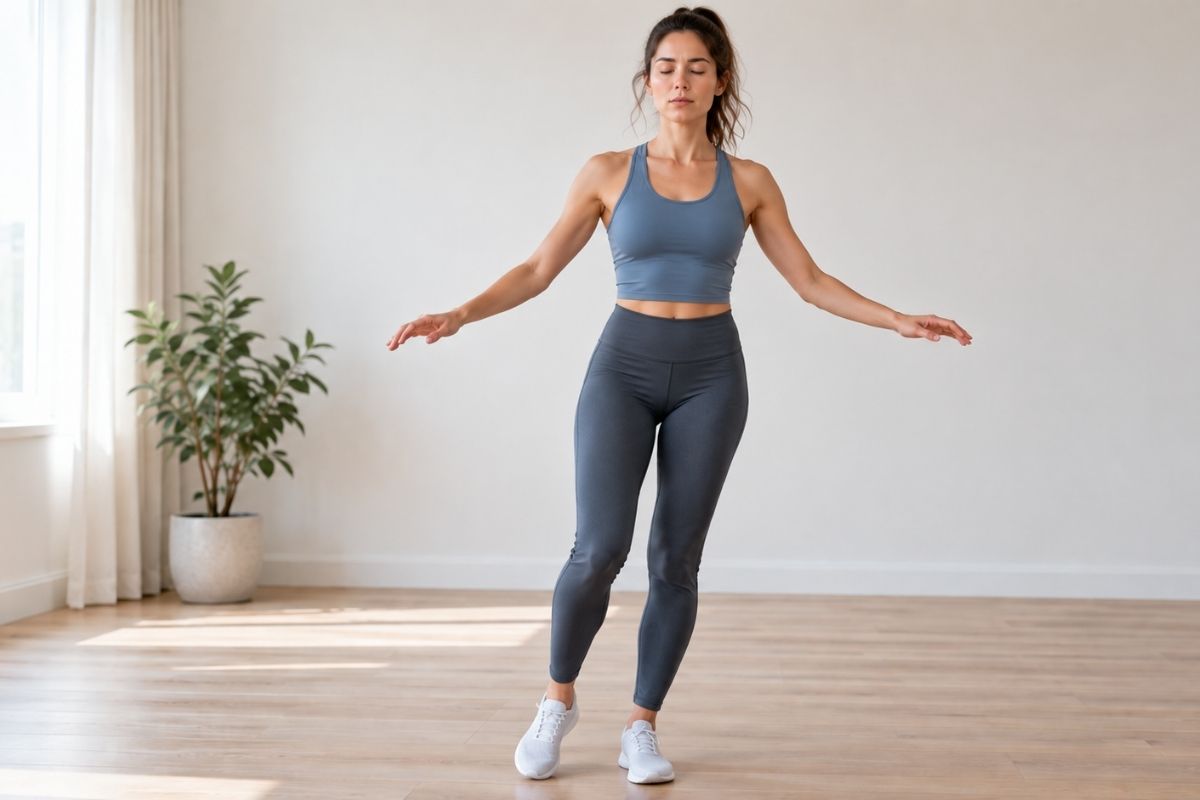
Standing on one leg can feel completely manageable until you close your eyes. A heel-to-toe position that felt steady can suddenly become shaky.
Walking in a straight line may also take more concentration than expected. Balance depends on three main systems working together: vision, the vestibular system in the inner ear, and proprioception, which tells your brain where different parts of your body are positioned. Closing your eyes takes visual information out of that group.
Many people rely heavily on vision during everyday movement, often without noticing it. Once visual cues disappear, the other systems have to contribute more.
Any weakness in those signals, or difficulty coordinating them, may become easier to notice.
The Three Systems That Keep You Balanced
| System | Role | Eyes Closed |
| Vision | Provides visual reference points. | Visual guidance disappears. |
| Vestibular system | Detects head position and movement. | Inner-ear input matters more. |
| Proprioception | Tracks body position and pressure. | Sensory feedback matters more. |
Good balance is not controlled by one body part. Your brain is constantly comparing several types of sensory information and making small corrections.
Vision gives you reference points. A horizon, wall, doorway, or fixed object helps your brain judge body position in relation to the environment.
Visual targets also help you keep direction while walking. Vestibular information comes through structures in your inner ear. Those structures detect the following:
- Head position
- Rotation
- Tilting
- Movement
Proprioception adds another layer. Sensory receptors in muscles and joints report joint position and movement. Pressure through your feet gives your brain additional information about weight distribution and contact with the floor.
Receptors in your lower body also respond when tissues stretch or pressure changes. Your brain compares all of those signals and decides how much muscular adjustment is needed to keep you upright. Most corrections are extremely small. An ankle shifts slightly.
A hip moves a little. Muscles around your trunk adjust tension. You usually do not notice any of it. After years of teaching balance work, People often assume steadiness means staying perfectly still. It does not. Good balance usually involves constant, small corrections that are controlled enough to go unnoticed.
What Changes When You Close Your Eyes?
Closing your eyes removes visual reference points, so your brain has to rely more heavily on vestibular information and proprioception.
Any small problem with those systems can then become much easier to notice. You may sway more. An ankle may work harder.
Your torso may start making larger corrections. A position that seemed easy with your eyes open may suddenly require much more concentration.
In a study we came across recently, performing a single-leg balance test, closing the eyes increased sway distance by 94% and sway velocity by 89%. Sway area increased by 400%. That does not mean everyone will wobble four times as much, but it shows how dramatically removing visual information can change a demanding balance task.
Walking straight can also become harder because you no longer have a visible target helping you maintain direction. Inner-ear signals and feedback through your muscles and joints still contribute, but visual guidance is gone.
Daily habits can also make us surprisingly dependent on our eyes. Even while sitting, when balance demands are relatively low, vision keeps working.
You read screens, scan rooms, follow movement, and constantly use visual information to orient yourself. Practice enough movement with that visual input available, and your nervous system gets very good at using it.
If your balance changes dramatically when your eyes close, it does not mean your balance system has stopped working. It may mean vision was doing more of the stabilizing work than you realized.
Why Some People Struggle More Than Others
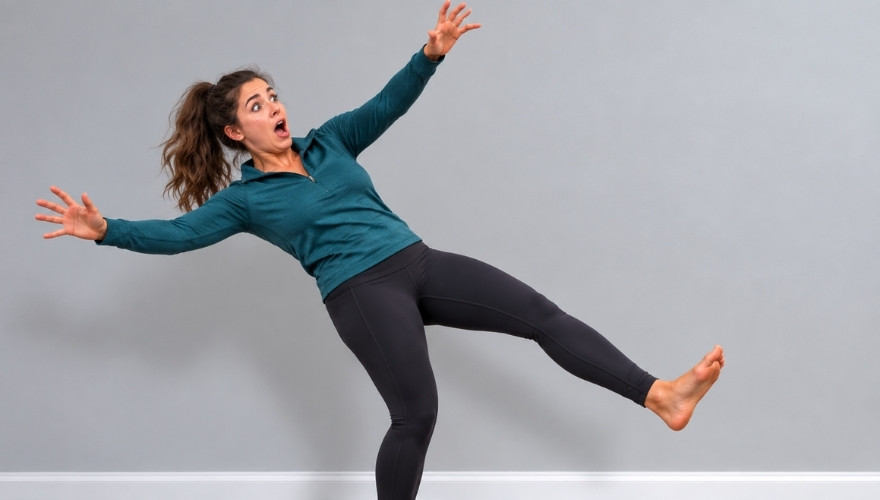
Heavy visual reliance does not point to one specific problem. Several factors can contribute. People recovering after concussion, vestibular disruption, neck injury, or long periods of reduced activity may depend more heavily on visual cues. Similar patterns can develop after months of cautious movement caused by dizziness, discomfort, or uncertainty.
Confidence can affect the way someone organizes movement as well. A person who expects to lose balance may stiffen through the neck, shoulders, hips, and trunk, creating a body that is harder to adjust once sway begins. Confidence also matters. Someone who does not trust a balance position may stiffen excessively.
Neck tension can increase. Breathing may become guarded. Large, rigid contractions can interfere with the small automatic adjustments that normally help you stay upright. That pattern often occurs during practice.
A small wobble appears, the whole body tightens, and the next correction becomes larger because the joints have less freedom to respond. Extra tension can feel protective, but too much of it can make balance less adaptable. More tension is not always more control.
Poor balance with closed eyes also does not automatically indicate permanent inner-ear damage. Visual compensation, incomplete recovery, reduced sensory efficiency, or difficulty combining sensory signals can all play a role.
One eyes-closed balance test cannot identify an exact cause. It only shows how your balance changes when visual information is unavailable.
Can You Improve Eyes-Closed Balance?
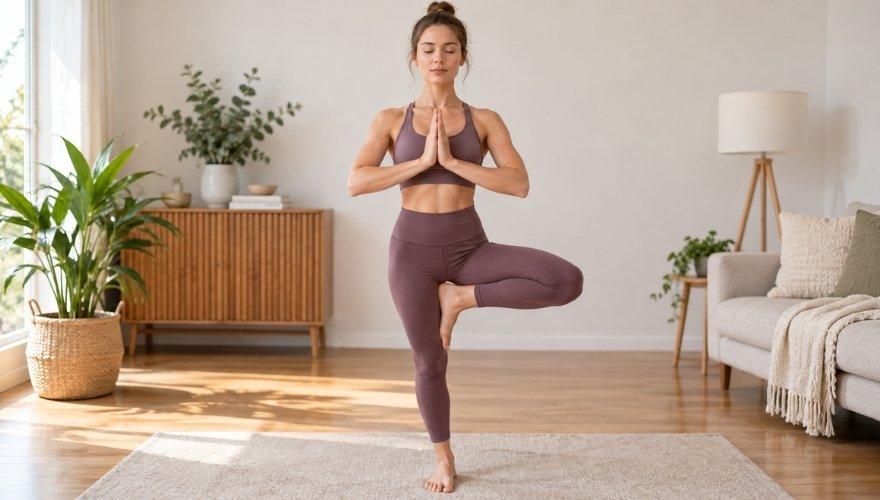
Improvement usually comes through gradually reducing the help you rely on, rather than taking that help away all at once.
Start with a position you can control comfortably while looking ahead. A basic split stance, heel-to-toe position, or supported single-leg stance can work well.
Aim for steady breathing and small corrections rather than trying to freeze your body completely.
Next, make vision less helpful without removing it entirely. Turn your head slowly while holding the position. Look at different points in the room.
Try reading something while staying steady. Those variations force your balance system to manage changing visual information while vestibular and proprioceptive signals keep contributing. Progress to closing your eyes only after the easier version feels controlled.
| Practice | What to Do |
| Keep attempts short | Start with a few controlled seconds instead of holding until you become very shaky. |
| Use support | Practice near a wall, corner, or sturdy chair you can reach if needed. |
If your feet are repeatedly stepping out, your torso is twisting hard, or you need support every second, the exercise has become too difficult to train cleanly.
Make the position easier and give your nervous system a version it can actually organize.
Difficulty alone does not make a balance drill useful. A well-chosen exercise should challenge your control while still allowing you to make small, deliberate corrections.
Do not turn eyes-closed practice into a test of stubbornness. If your feet are scrambling, your torso is twisting, and you are reaching for support every second, reduce the difficulty.
Useful training should challenge your balance without taking away your ability to correct it.
What People Ask About Balance with Closed Eyes
Is it normal to be better on one leg than the other?
Yes. Small side-to-side differences are common. Previous injuries, ankle mobility, hip strength, foot control, and everyday movement habits can all affect one side more than the other.
A large or sudden difference is more worth paying attention to, especially if one side also feels painful, weak, or unstable during normal movement.
Should I practice balance barefoot?
Barefoot practice can give you clearer sensory feedback through the feet, especially on a firm surface. Shoes can change how pressure feels and how much the foot has to adjust.
We usually like barefoot work for controlled indoor practice, but shoes make sense if you need support or are training for an activity where you normally wear them.
Does balance naturally get worse with age?
Balance can become less reliable with age because vision, inner-ear function, reaction speed, strength, and sensation through the feet can all change.
Studies show us that healthy adults in their 20s averaged 29.3 seconds standing on foam with their eyes closed, while adults in their 80s averaged 6.7 seconds under the same test conditions.
Closing Thoughts
Closing your eyes does not switch off balance. It removes visual guidance. Vestibular information and proprioception then have to carry more of the workload. Any limitation in those systems, or in how your brain combines their signals, can become easier to notice.
A little wobble is not the problem by itself. What matters is how well you can recognize it, correct it, and gradually depend less on vision when the exercise calls for that.
Good balance practice should make those corrections more organized over time. It should not simply make you better at surviving a harder position.
Studies show that average sway path over 30 seconds increased about 35% when participants closed their eyes. Sway area increased about 40% as well.
Small corrections were still happening with their eyes open. Taking vision away simply made them larger.